

VALUE
About a year into my first MSL role, I experienced a defining moment while sitting with a cup of coffee. A simple thought surfaced that would eventually become my field mantra:
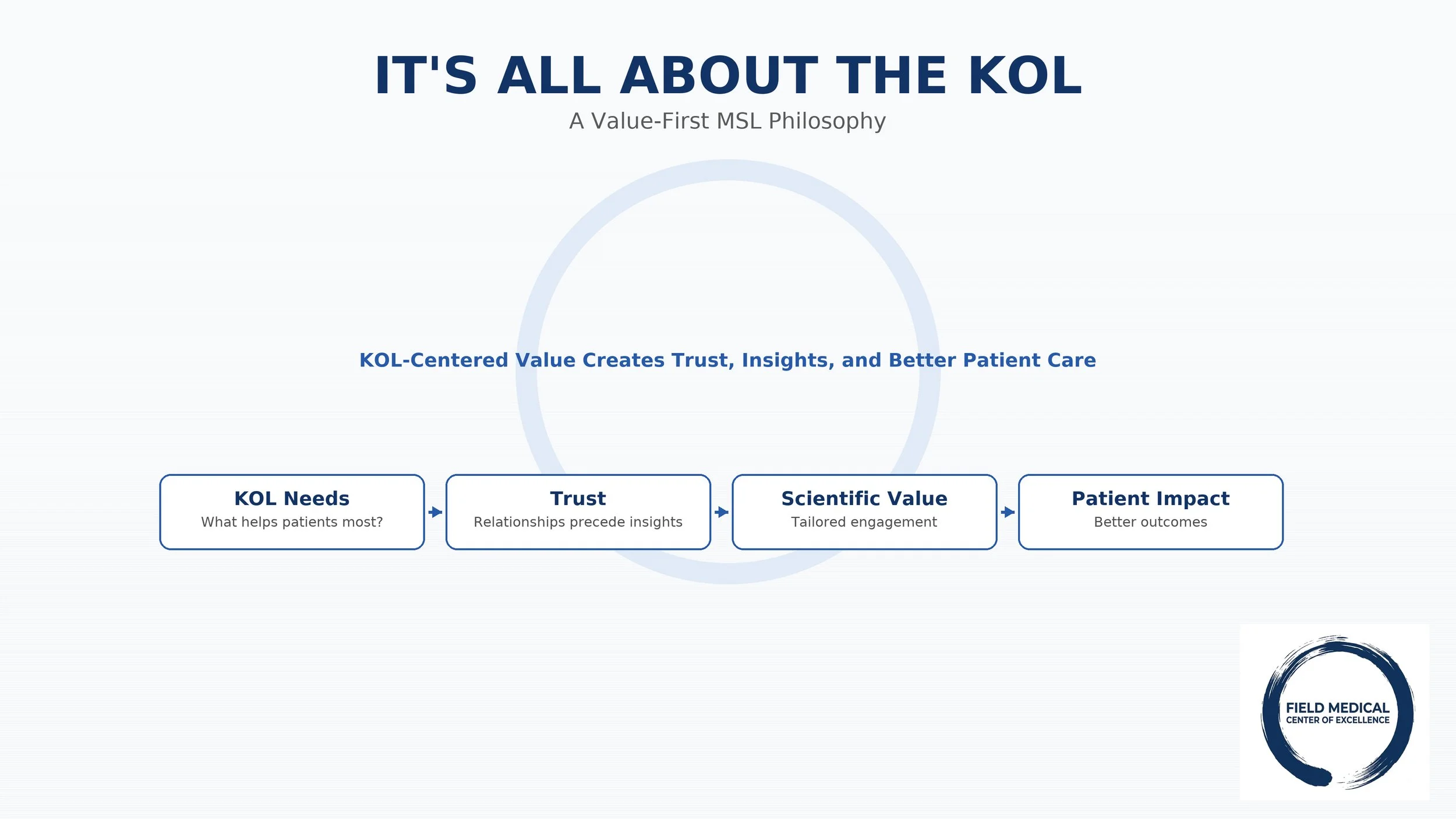
“It's all about the KOL.”
At the time, the phrase felt as though it captured my entire philosophy as an MSL. On the surface, it may sound like a reminder to accommodate KOL preferences, communication styles, and demanding schedules. While those elements certainly matter, the meaning runs much deeper.
As I continued to reflect on this principle, I came to realize that it represents a fundamentally value-based approach to the MSL role. Respecting preferences is the baseline. The real question is how we can create meaningful value for the physician and, ultimately, for their patients. This mindset is reflected in questions such as:
· What does this KOL need to better serve their patients?
· Are there clinical trials that may be relevant to their interests or patient population?
· What are their scientific and research interests, and how might those align with the company's translational or clinical research priorities?
Questions like these help uncover not only what a KOL truly needs, but also how an MSL can best support them. The goal shifts from simply conducting interactions to becoming a trusted partner who provides meaningful scientific value.
Learning how to create value during in-person or virtual meetings takes time. It requires developing an understanding of individual KOLs while simultaneously refining one's broader MSL skill set. Over time, an appreciation also develops for the diversity of KOL types and needs.
“It’s all about the KOL”
For example, internationally recognized thought leaders often require little education regarding mechanisms of action or pivotal clinical trial data. Their interests may instead center on early-phase development programs, emerging scientific hypotheses, investigator-sponsored research (ISR), or strategic discussions about the future direction of a therapeutic area. These experts also serve as invaluable sources of insight regarding the current treatment landscape, evolving standards of care, and interpretations of newly released datasets.
In contrast, community-based providers may have different needs. They are often deeply focused on patient care and may have less time to stay abreast of every scientific advancement. In these situations, education itself can become one of the most valuable services an MSL provides.
In many ways, great MSLs can be evaluated similarly to great people managers. The best managers serve their teams according to individual needs and preferences. Likewise, the most effective MSLs serve their KOLs according to what those KOLs need most. Value-focused MSLs consistently place KOL needs at the center of their interactions. Practically, this begins by understanding the KOL's agenda and concerns before introducing your own. Reviewing and agreeing upon meeting objectives at the outset can transform an interaction from a routine exchange into a meaningful and productive discussion. When KOL priorities drive the conversation, the meeting naturally becomes more valuable.
This perspective is especially important because physicians are extraordinarily busy. They simply do not have time for interactions that offer little value. At the same time, physician burnout remains one of the greatest challenges facing modern medicine (Guille and Sen, 2024). Most physicians spend their days directly caring for patients or supporting critical patient care functions. Their time is precious.

MSLs who are value-centric tend to have the strongest relationships with their thought leaders.
A value-minded MSL recognizes this reality. Meetings are not scheduled merely to satisfy internal metrics or check a box. Sometimes a discussion may focus entirely on a KOL's questions or concerns, with little attention given to the originally planned company agenda. To some individuals within the home office, this may seem inefficient or even counterproductive. It may not generate the anticipated insights or advance a specific strategic objective. One could even argue that the MSL is not maximizing the potential of the interaction from a company perspective.
But is that really the case? My experience suggests otherwise. Relationships precede insights. Without strong relationships, even the best questions may yield limited or unreliable information. Conversely, when relationships are built on trust, openness, and mutual respect, the quality and depth of insights improve dramatically. In this sense, the strength of the relationship determines the value of everything that follows. That is why the principle of “It's all about the KOL” matters. It allows the MSL to temporarily set aside personal objectives and focus on what is most important to the physician.
The rationale is simple. As MSLs, we do not directly treat patients. Physicians do. Even those who are not patient-facing, such as pathologists or radiologists, play essential roles in the delivery of care. Therefore, by helping KOLs succeed in serving their patients, MSLs can indirectly influence patient outcomes in the most meaningful way possible. There is also an element of selflessness in this approach. Supporting a KOL's needs requires setting aside personal preferences and, at times, even organizational priorities in favor of what creates the greatest value for the physician. The unique aspect of the MSL role is that this service-oriented mindset often generates a ripple effect. By helping one physician provide better care, an MSL may ultimately contribute to improved outcomes for countless patients.
Some may argue that value must flow in both directions. The KOL should benefit from the interaction, but the company and the MSL should also gain insights and strategic value in return. That is certainly true. Yet there is an interesting paradox in field medical. The most meaningful insights often emerge naturally when they are not the primary objective. When genuine value creation becomes the mission and when the interaction is truly centered on the KOL, trust deepens, relationships strengthen, and insights flow organically. In the end, value returns to the MSL and the organization precisely because, from the very beginning, it was all about the KOL.
References:
Guille C, Sen S. Burnout, Depression, and Diminished Well-Being among Physicians. N Engl J Med. 2024 Oct 24;391(16):1519-1527. doi: 10.1056/NEJMra2302878. PMID: 39442042. (https://www.nejm.org/doi/full/10.1056/NEJMra2302878)
Note on use of AI:
Values fascicle was creatively developed based on professional experience and the ideas described herein are original to the best of our knowledge. All ideas were developed by Mirza Peljto, PhD and the Field Medical Center of Excellence. Once the ideas were developed, initial text was produced by Dr. Mirza Peljto. Once the original fascicle was fully written, the final version was proofread by Microsoft Copilot (GPT-5-based large language model) [Large language model]. https://copilot.microsoft.com Microsoft (2026) with any subsequent minor editorial changes. The meaning of the original text was fully retained. Microsoft Copilot was used to assist with editorial review, grammar correction, and stylistic refinement. All conceptual content, framework development, and scientific interpretations originated from the author and were independently reviewed prior to publication.
SIX EFFORTLESS MSL COMPETENCIES
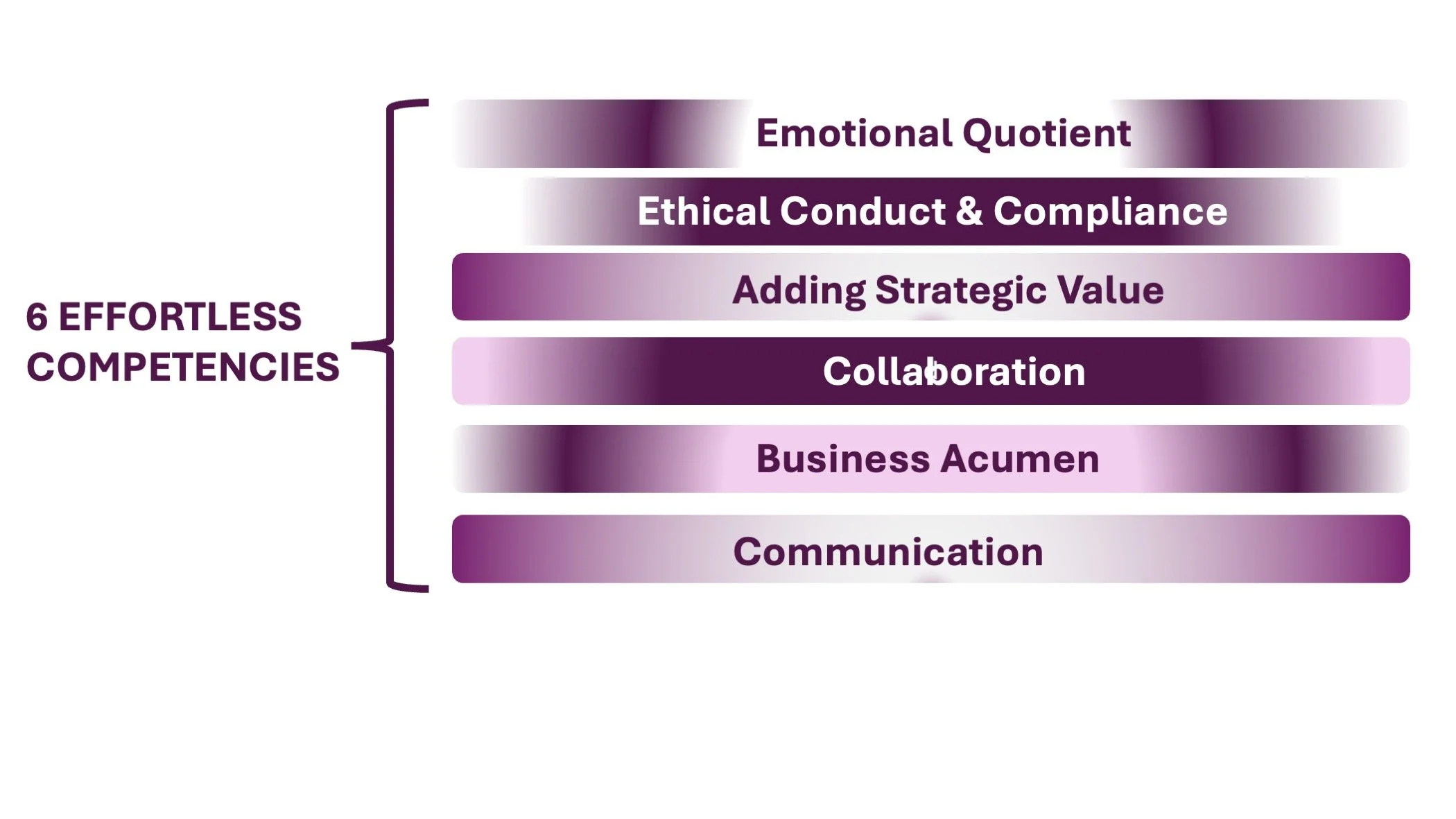
Here, we continue building on the four core Medical Science Liaison (MSL) Competencies by adding six effortless MSL competencies as a complement. The reason they are called effortless is because they are to be mastered to an effortless level by MSLs.
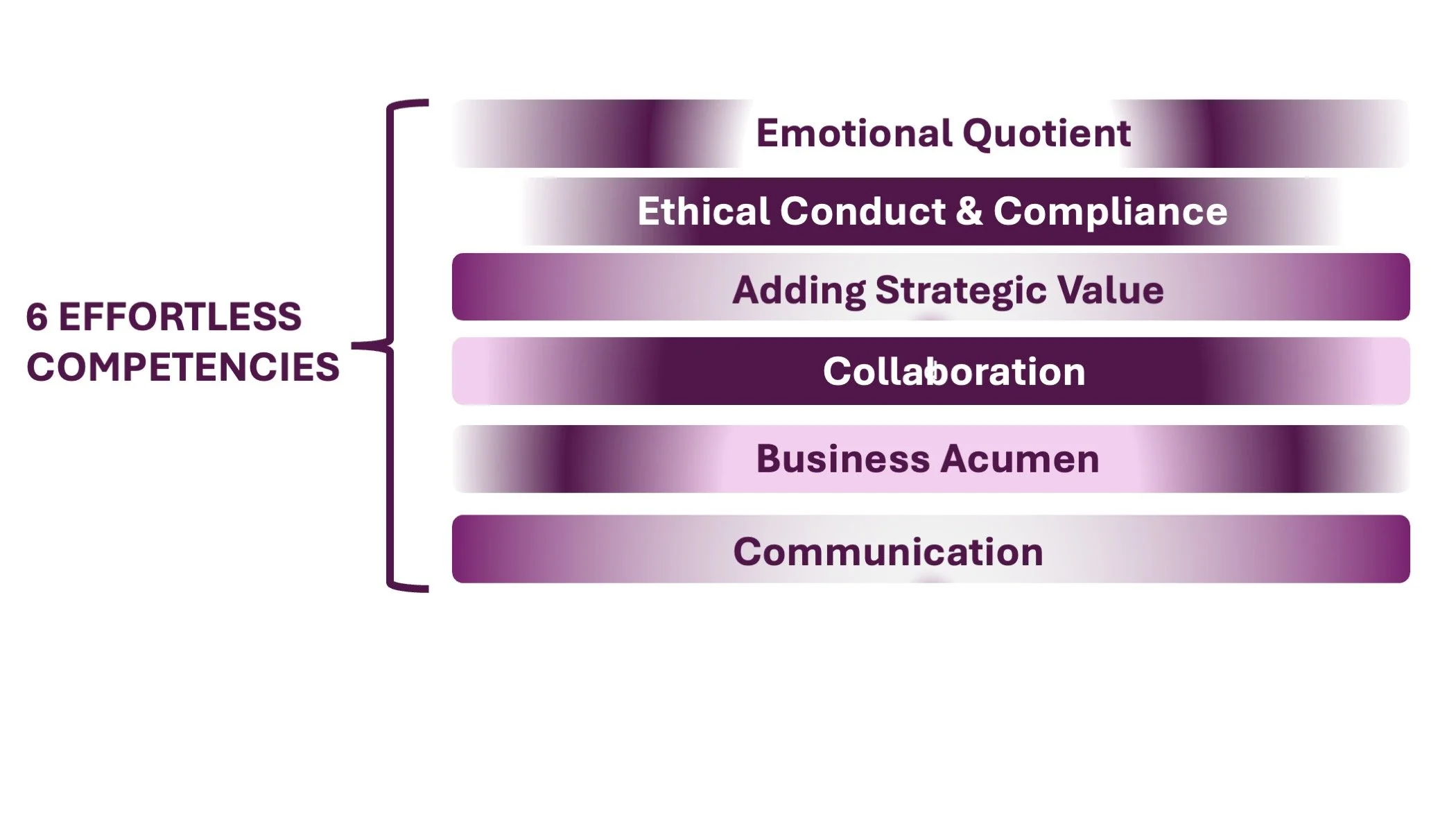
Six effortless MSL competencies are: emotional quotient (emotional intelligence), ethical conduct and compliance, adding strategic value, collaboration, business acumen, and communication.
I. Emotional Quotient
Although research consistently demonstrates that emotional quotient (EQ), also known as emotional intelligence, is highly malleable and can be developed over time, many professionals still subscribe to the belief that “you either have it or you don’t.” Daniel Goleman organized emotional intelligence into four core domains, two personal competencies and two social competencies. The personal competencies are self-awareness and self-management, while the social competencies are social awareness and relationship management (Goleman, 1998).
Self-Awareness
MSLs with a high degree of self-awareness are adaptable and capable of navigating a wide variety of situations with authenticity and professionalism. They are attuned to their emotions, strengths, weaknesses, values, and motivations, while also recognizing how these characteristics influence others. Self-aware MSLs understand the importance of “reading the room” and adjusting their approach to fit the audience and circumstance.
They are comfortable acknowledging the limits of their knowledge and are more likely to say, “I don’t know, but I will find out,” rather than speculate or provide incomplete information. They possess confidence without arrogance and are genuinely comfortable in their own skin. They are mindful of their body language, tone, and communication style and can adapt these elements to effectively respond to the needs of the moment.
Self-Management
MSLs with strong self-management demonstrate emotional control, resilience, and professionalism, particularly during challenging situations. They are able to manage impulses, avoid reactive responses, and maintain composure under pressure. These individuals project confidence and executive presence while remaining approachable and collaborative.
Whether interacting with difficult stakeholders, navigating organizational change, or facing unexpected adversity, they remain focused on solutions rather than problems. They adapt to change with agility while pursuing their goals with persistence, discipline, and sustained energy.
Developing self-awareness and self-management is ultimately the responsibility of the individual. Seeking honest feedback from trusted colleagues, mentors, friends, and family members can provide valuable insights. Practices such as reflection, mindfulness, meditation, and intentional pauses throughout the day can help enhance both self-awareness and emotional regulation.
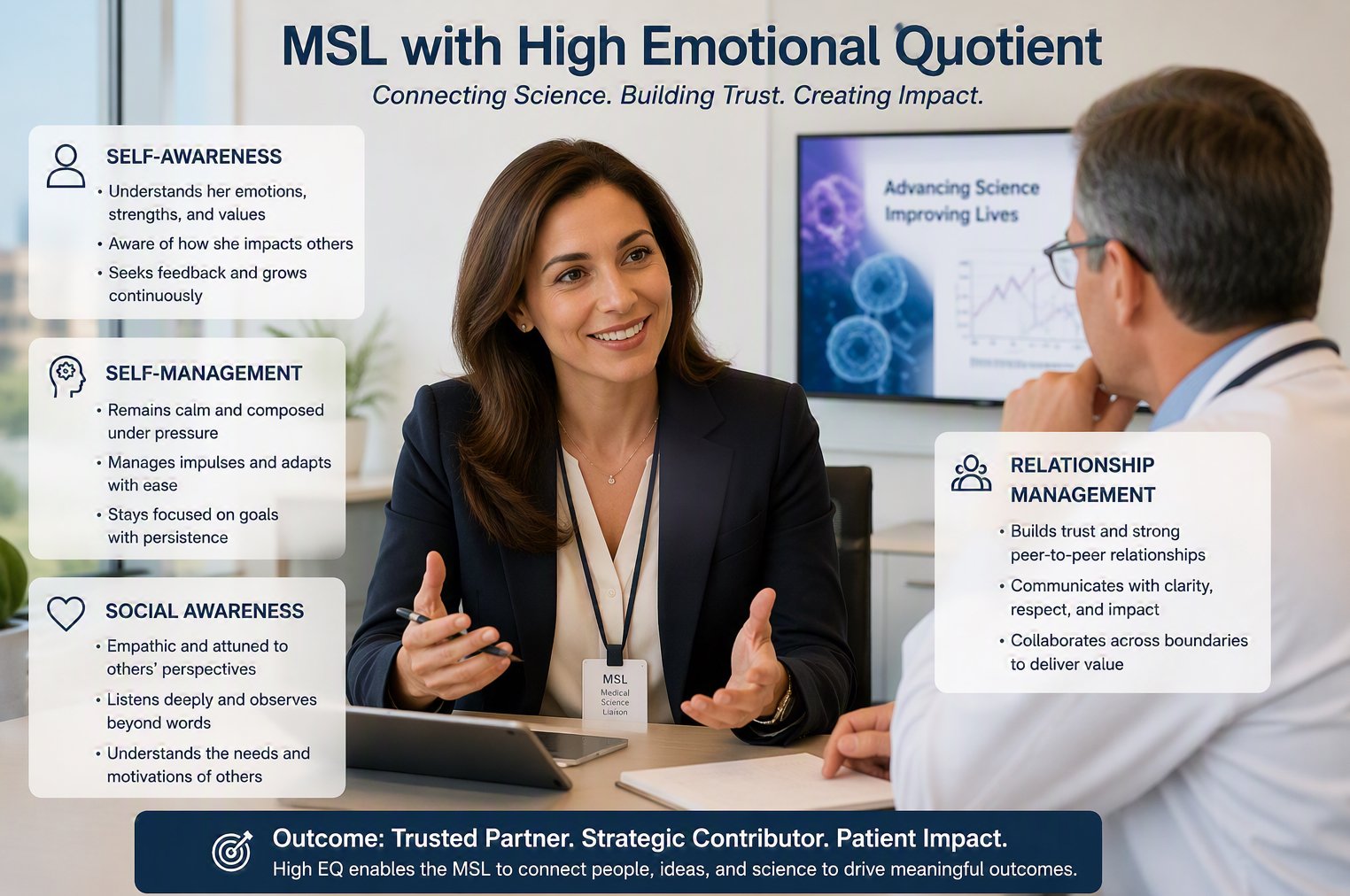
MSLs with a high degree of EQ have strong self-awareness, self-management, social awareness, and relationship management attributes.
Social Awareness
Social awareness and relationship management often take longer to develop and require a greater degree of emotional maturity. For MSLs, social awareness involves understanding the emotional makeup, perspectives, motivations, and needs of others. It requires active listening, empathy, and the ability to genuinely connect with a diverse range of individuals.
Highly effective MSLs can recognize subtle verbal and nonverbal cues and adjust their communication style accordingly. They are able to create trust and rapport because stakeholders feel understood, respected, and valued.
Relationship Management
Without the ability to build and manage relationships effectively while consistently delivering value to internal and external stakeholders, an MSL will struggle to reach their full potential. Relationship management is arguably one of the most important—and challenging—competencies in the role.
I believe every MSL benefits from having a strong field mentor, ideally a Principal or Executive MSL who has mastered the art of relationship management. Such mentors can coach less experienced MSLs through complex stakeholder dynamics and help them develop stronger engagement strategies.
Relationship management is both a science and an art. It is developed through years of experience, continuous refinement, and meaningful interactions in the field. It requires ongoing introspection and reflection about why certain relationships thrive while others stagnate. It also demands attention to nuance, recognizing that approaches that resonate with one thought leader may be ineffective with another. Successful MSLs tailor their engagement strategies while remaining authentic and value-driven.
Manager’s Corner
EQ can often be assessed during the interview process through thoughtful behavioral questions and careful observation of a candidate’s communication style, self-awareness, and responses to challenging scenarios. While isolated observations should never be overinterpreted, details such as professionalism, preparation, receptiveness to feedback, and interpersonal presence can provide insight into a candidate’s level of emotional intelligence.
Managers can play a critical role in developing EQ among individual contributors, particularly when trust-based relationships have been established. Frequent coaching, timely feedback, and individualized development plans can significantly accelerate growth in this area.
Team meetings and field interactions provide excellent opportunities to discuss emotional intelligence, share examples of high-EQ behaviors, and reinforce best practices through stories and real-world experiences. Understanding the unique strengths and developmental opportunities of team members also creates valuable peer-coaching opportunities. For example, an individual with exceptional self-awareness may serve as a mentor to a colleague looking to strengthen that competency.
Ultimately, however, these developmental practices are only effective within a culture built on trust, psychological safety, empowerment, and a genuine commitment to continuous improvement.
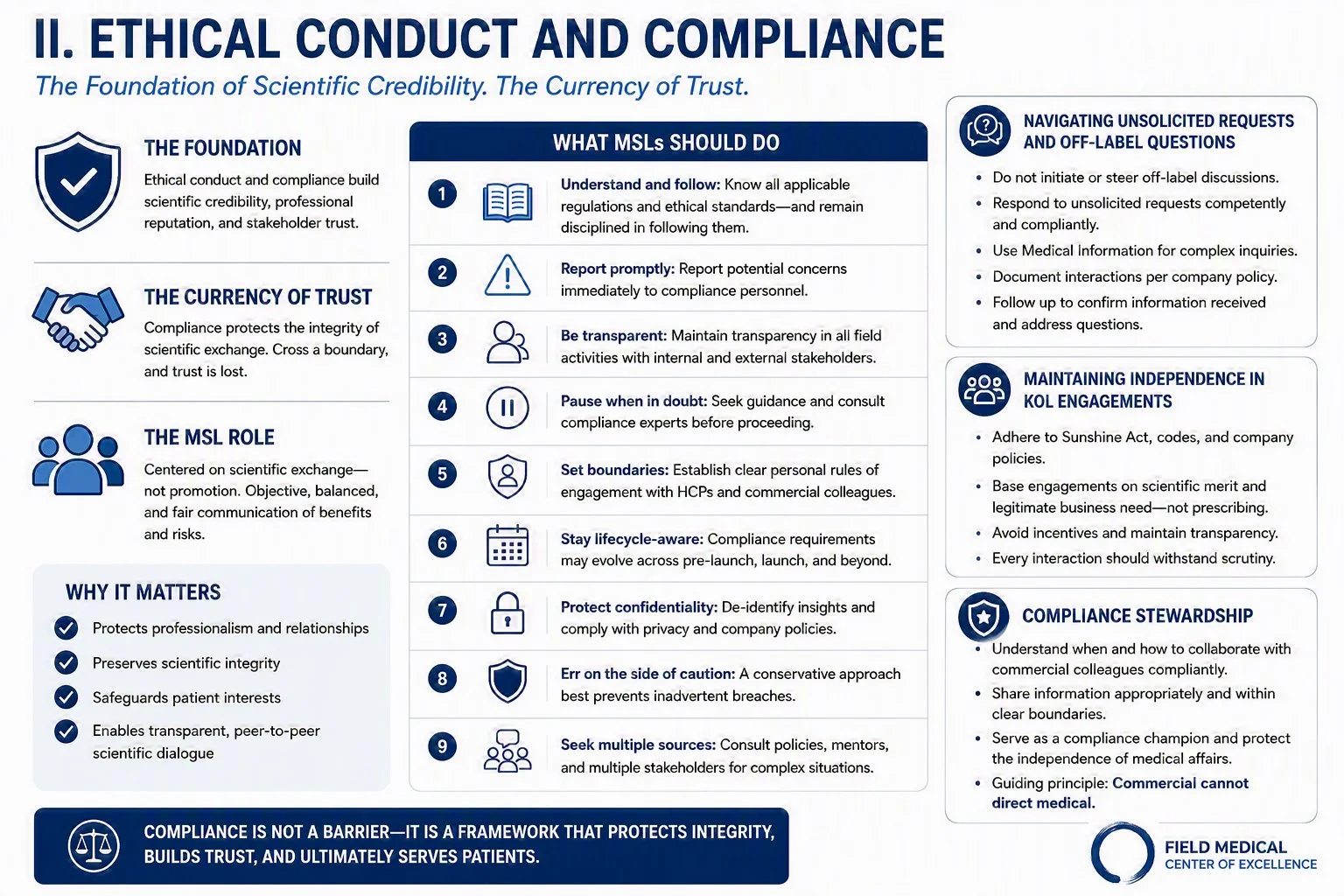
The frameworks for ethical conduct and compliance stewardship.
II. ETHICAL CONDUCT AND COMPLIANCE
Ethical conduct and compliance are among the most fundamental competencies of an effective Medical Science Liaison (MSL). They are not simply requirements of the role; they are the foundation upon which scientific credibility, professional reputation, and stakeholder trust are built. Ethical misconduct or non-compliant behavior can have significant consequences for both the individual and the organization.
Compliance is about far more than “following the rules.” It is the framework that protects the integrity of scientific exchange. The moment a healthcare professional perceives that an MSL has crossed an ethical or compliance boundary, trust can be irreparably damaged. Ethical conduct and compliant engagement are the currency of trust in the field. An MSL’s value is rooted in scientific credibility, and any behavior that places that credibility—or the reputation of a thought leader—at risk is rarely worth the potential gain.
Most organizations provide compliance training for medical affairs professionals. Some maintain dedicated field medical compliance teams, while others rely on detailed codes of conduct and compliance manuals to guide field interactions. Although these resources are invaluable, many situations encountered by MSLs are nuanced, requiring consultation, mentorship, and collaboration with compliance experts. The challenge is often amplified when working alongside commercial colleagues in the field.
So, what should MSLs do?
1. Develop a deep understanding of all applicable compliance regulations and ethical standards within your country, therapeutic area, and organization—and remain disciplined in following them.
2. Report potential compliance concerns immediately. If you observe non-compliant behavior or find yourself involved in a situation that may present a compliance risk, engage the appropriate compliance personnel without delay.
3. Maintain transparency in all field activities with both internal and external stakeholders.
4. When in doubt, pause. Seek guidance, gather additional information, and consult compliance experts before proceeding. If your organization has dedicated field medical compliance personnel, ask for specific recommendations on how to navigate the situation.
5. Establish clear personal boundaries and rules of engagement. This includes situations involving meals, field visits, and interactions with commercial colleagues.
6. Recognize that compliance considerations may evolve throughout the product lifecycle, particularly during pre-launch and launch periods.
7. Ensure all stakeholder insights are appropriately de-identified and compliant with company policies and privacy regulations.
8. Err on the side of caution. A conservative approach is often the best safeguard against inadvertent compliance breaches.
9. Leverage multiple sources of guidance. Consult company policies, seek mentorship from experienced compliance-minded professionals, and gather perspectives from multiple stakeholders when navigating complex situations.
At its core, the MSL role is centered on scientific exchange rather than commercial promotion. This distinction represents one of the most important compliance boundaries in medical affairs. Scientific information must be presented objectively, including efficacy data, safety findings, limitations, adverse events, and areas of uncertainty. Benefits and risks should always be discussed in a fair and balanced manner.
Perhaps most importantly, MSLs should not view compliance as an obstacle to effective field engagement. Rather, compliance is a framework that protects professionalism, strengthens relationships, preserves scientific integrity, and ultimately serves patients. In many ways, compliance enables the transparent, peer-to-peer scientific conversations that distinguish the medical function from commercial organizations.
Navigating Unsolicited Requests and Off-Label Questions
MSLs should never proactively initiate or steer discussions toward off-label topics. At the same time, they are expected to competently address unsolicited requests from healthcare professionals regarding off-label data. Successfully navigating these conversations requires both scientific expertise and strong situational awareness. MSLs must balance their role as scientific resources with the compliance boundaries that ensure interactions are never perceived as promotional.
Many organizations have Medical Information departments that support the management of complex off-label inquiries, particularly when additional literature, analyses, or data are required. MSLs should be familiar with their organization's policies, documentation requirements, and escalation pathways for handling such requests.
When responding to an unsolicited off-label question, best practice includes documenting the interaction in accordance with company policies and ensuring that any response provided is accurate, balanced, and supported by available evidence. Follow-up may also be appropriate to confirm that the healthcare professional received the requested information and to address any questions regarding the response.
Maintaining Independence in KOL Engagements
Developing strong peer-to-peer relationships with Key Opinion Leaders (KOLs) requires a high level of ethical vigilance. This includes understanding and adhering to the U.S. Sunshine Act (and global equivalents), industry codes of conduct, and company-specific policies governing interactions with healthcare professionals.
MSLs with strong ethical foundations ensure that advisory board invitations, speaker nominations, research collaborations, and similar activities are based solely on scientific merit, expertise, and legitimate business need. These activities should never be influenced by prescribing patterns or used as incentives to influence clinical decision-making. Transparency and honesty remain the guiding principles. Ideally, every interaction, decision, and engagement should be able to withstand scrutiny from regulators, healthcare professionals, internal stakeholders, and the public.
When MSLs operate ethically and compliantly, they not only protect themselves and their organizations but also safeguard the integrity and independence of the healthcare professionals with whom they engage. For this reason, I have always maintained a strong interest in both compliance frameworks and their practical application in day-to-day field activities. During my tenure at one organization, I had the privilege of serving as a Medical Compliance Champion for the field medical team, helping colleagues navigate complex compliance scenarios and reinforce best practices.
Compliance Stewardship
Throughout my experience as both an MSL and an MSL leader, one of the greatest compliance risks has often arisen from well-intentioned pressure exerted by commercial stakeholders. Navigating this interface requires clarity, discipline, and a thorough understanding of applicable compliance requirements.
MSLs must understand when joint interactions with commercial colleagues are appropriate, how information can be shared compliantly, and where boundaries exist. Alignment between medical and commercial teams is essential, but alignment must never come at the expense of the independence of the medical function. MSLs should know how to collaborate effectively with sales and marketing colleagues while avoiding activities that could compromise compliance. This includes understanding appropriate approaches to sharing insights, participating in cross-functional discussions, and engaging with healthcare professionals.
In my experience, commercial colleagues may not always appreciate the complexity and rigor of medical compliance requirements. Consequently, MSLs often serve as internal champions of compliance, helping protect the organization's reputation while preserving the credibility and independence of the medical function. This responsibility can become even more challenging in organizations where medical affairs functions report through commercial leadership structures. In these environments, maintaining scientific independence requires strong communication skills, professional courage, and an unwavering commitment to compliance principles.
If there is one guiding principle that has consistently served medical affairs professionals well, it is this:
Commercial cannot direct medical.
While this principle does not eliminate the need to understand the specific compliance requirements governing field interactions, it serves as an important compass for collaborating with commercial colleagues. Mastering this balance requires ongoing dialogue, relationship-building, and a willingness to educate stakeholders on the rules and standards that govern compliant scientific engagement. Ultimately, compliance stewardship is not just about preventing risk—it is about preserving the integrity, credibility, and independence that make the MSL role uniquely valuable.
III. ADDING STRATEGIC VALUE
Medical Science Liaisons have a unique opportunity to create meaningful value for a diverse group of stakeholders, provided that ethical conduct and compliant behavior remain at the center of all activities.
Broadly speaking, these stakeholders can be divided into internal stakeholders (those within the organization) and external stakeholders (those outside the organization). Depending on the therapeutic area and company structure, internal stakeholders may include representatives from translational medicine, clinical development, medical affairs, commercial, marketing, market access, legal, regulatory affairs, and many others. The most effective MSLs are not passive participants in these relationships. Instead, they leverage their scientific expertise, field insights, and understanding of organizational priorities to deliver value across multiple functions. The extent to which this occurs is often influenced by company culture—whether collaboration is encouraged across departments or whether teams operate in relative isolation.
External stakeholders are often thought of primarily as Key Opinion Leaders (KOLs), but the ecosystem is much broader. It may include healthcare institutions, medical departments, advanced practice providers, nurses, pharmacists, investigators, patient advocacy groups, research networks, and external collaborators from partner organizations. Ultimately, the highest form of value creation occurs when MSL activities benefit both internal and external stakeholders while advancing patient care. This is true strategic value.
MSLs create value in many ways, including identifying actionable medical insights, supporting clinical trial activities, facilitating investigator-sponsored research, fostering scientific collaborations, assisting with evidence-generation efforts, and connecting external scientific needs with internal organizational capabilities. The possibilities are virtually limitless.
MSLs who possess a deep understanding of both the healthcare landscape and their company's strategic priorities are particularly effective in this area. They can identify opportunities, recognize unmet needs, and compliantly align stakeholder interests with organizational objectives. They develop strong cross-functional relationships and maintain awareness of evolving priorities across multiple internal teams. In many respects, these MSLs operate with a "value-first" mindset, seeking opportunities to contribute value in every interaction.
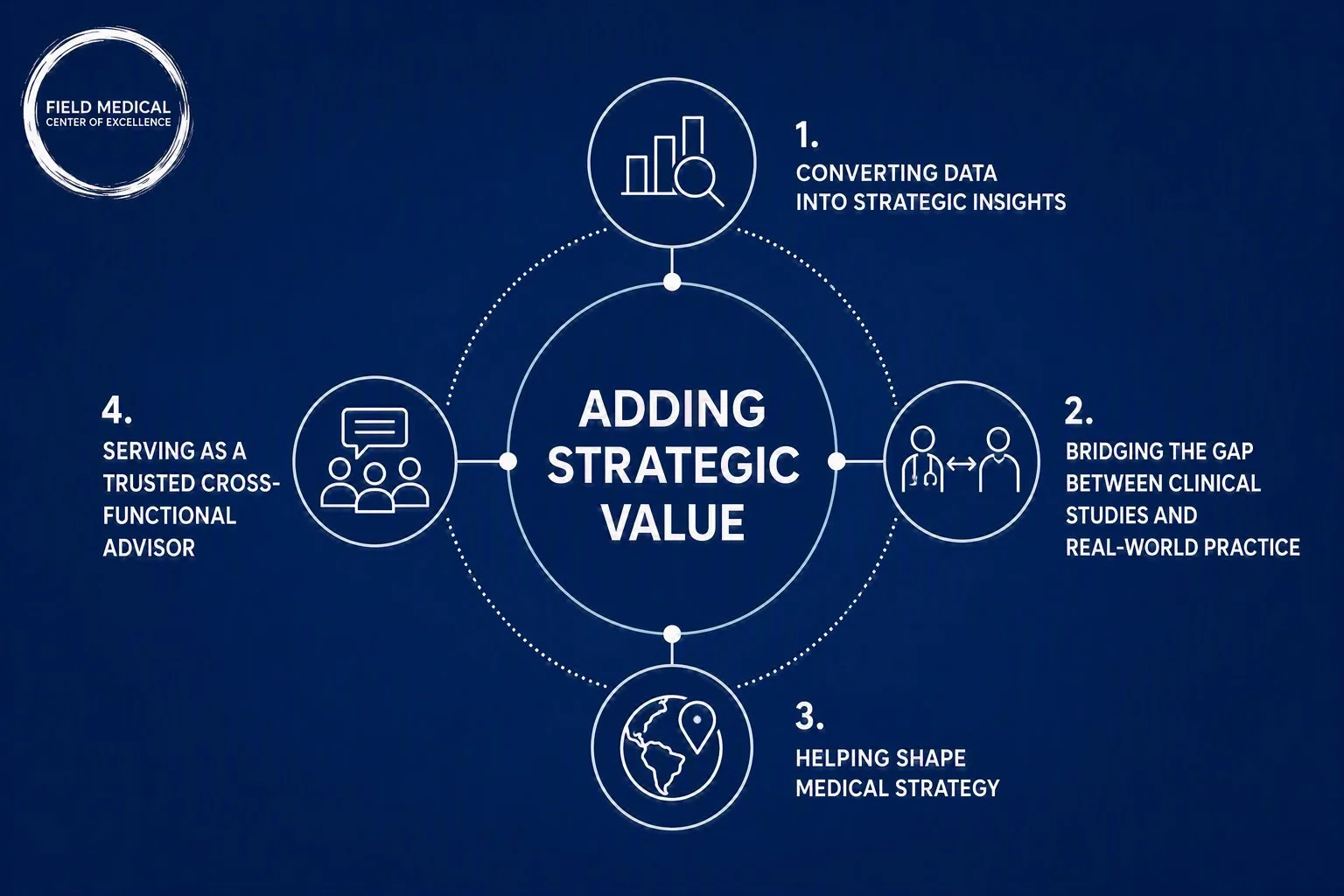
MSLs add strategic value by: 1. converting data into strategic insights; 2. bridging the gap between clinical studies and real-world practice; 3. helping shape medical strategy; 4. serving as a trusted cross-functional advisor.
The most impactful MSLs do not simply communicate company strategy to the field—they help shape company strategy through what they learn from the field.
1. Converting Data into Strategic Insights
An average MSL may submit a field report stating: "Dr. Smith is using Asset X in second-line patients." A strategic MSL goes a step further and answers the question: "So what?"
More importantly, they seek to understand why. Why is the KOL practicing in that manner? What underlying belief, unmet need, clinical experience, or market dynamic is influencing the decision?
The ability to convert observations into strategic insights represents the difference between passive reporting and strategic contribution. Strategic MSLs synthesize information across multiple stakeholder interactions, identify recurring themes, recognize emerging patterns, and connect seemingly unrelated observations. They uncover clinical unmet needs, shifts in treatment paradigms, barriers to access, emerging scientific trends, and potential opportunities for future evidence generation. Rather than merely reporting what a KOL said, they explain why it matters and how it may impact clinical development, medical strategy, evidence-generation plans, or the organization's future pipeline.
2. Bridging the Gap Between Clinical Studies and Real-World Practice
Few roles sit closer to the intersection of clinical development and real-world medicine than the MSL role. MSLs have a front-row seat to how clinical data is interpreted, questioned, and applied by practicing healthcare professionals. One of the greatest sources of value an MSL can provide is identifying gaps between the questions clinical trials answer and the questions clinicians are actually asking. This often becomes evident when MSLs repeatedly hear questions regarding topics such as:
Specific patient subpopulations
Treatment sequencing
Combination therapies
Long-term safety outcomes
Real-world effectiveness
Quality-of-life measures
Practical implementation challenges
By recognizing these patterns, MSLs serve as a critical feedback mechanism for clinical development, medical affairs, and research teams. These insights can inform future studies, support investigator-initiated trials (IITs), and help ensure that future evidence-generation efforts address clinically relevant questions that matter most to healthcare providers and patients.
3. Helping Shape Medical Strategy
Strategically minded MSLs do far more than execute a medical plan developed at corporate headquarters. They contextualize that strategy and adapt it to the realities of their local geography, healthcare systems, and stakeholder networks. This competency is best described as territory entrepreneurship.
Experienced MSLs recognize that regional dynamics can vary significantly. Differences in treatment patterns, patient populations, institutional priorities, referral networks, and healthcare infrastructure often require tailored approaches. The most effective MSLs analyze their territories in much the same way a business owner evaluates their business. They identify opportunities, anticipate challenges, and seek solutions that improve scientific engagement and ultimately enhance patient outcomes. By bringing local perspectives into strategic discussions, they help ensure that organizational initiatives remain aligned with real-world clinical practice.
4. Serving as a Trusted Cross-Functional Advisor
MSLs interact regularly with a wide range of internal stakeholders, including colleagues in medical affairs, clinical development, market access, commercial, marketing, regulatory affairs, and other functions. Each of these groups relies on medical affairs to understand the scientific realities and evolving dynamics within the healthcare landscape.
MSLs who excel in this competency act as trusted cross-functional advisors. Through compliant sharing of objective, de-identified field insights, they help internal teams better understand stakeholder perspectives, emerging trends, scientific challenges, and unmet needs. These insights often challenge assumptions, clarify misconceptions, and ground strategic decision-making in real-world evidence and experience. As a result, organizational messaging, evidence-generation strategies, and medical initiatives become more closely aligned with the realities faced by healthcare providers.
In many ways, MSLs serve as indispensable internal consultants. Their unique vantage point at the interface of science, medicine, and clinical practice allows them to provide insights that few others within the organization can access. When effectively gathered, synthesized, and communicated, these insights help organizations develop stronger medical strategies and execute them in a manner that resonates with the evolving scientific landscape. Ultimately, the MSL who consistently adds strategic value is not measured solely by activity metrics or outputs. Rather, their impact is reflected in how effectively they connect stakeholders, translate insights into action, influence strategy, and contribute to better outcomes for patients.
IV. COLLABORATION
The best MSLs are known and valued by a wide range of internal stakeholders because of the quality of their insights, their level of engagement, and their willingness to collaborate. Collaboration sits at the very heart of the MSL role. Without collaboration with internal stakeholders, the MSL provides limited value to the organization. Likewise, without collaboration with external stakeholders, the MSL provides limited value to healthcare professionals and ultimately to patients.
For an MSL, collaboration can take many forms. It may involve helping facilitate an investigator-initiated trial (IIT), supporting enrollment efforts at a clinical trial site, contributing insights to a medical strategy discussion, or partnering with market access, clinical development, or medical affairs colleagues on important initiatives. Throughout my leadership experience, one of the competencies I consistently prioritized in MSLs was a strong collaborative mindset. This also requires intentionally allocating time and energy to support collaborative requests and viewing partnership as a core responsibility rather than an occasional activity. While collaboration with internal stakeholders is important, the highest level of collaboration—the true "gold standard" of the MSL role—is the ability to facilitate meaningful partnerships between the company and external stakeholders, including KOLs, investigators, institutions, and research networks. MSLs who excel in this area become trusted connectors, creating value for all parties while advancing scientific understanding and ultimately improving patient care.
Many MSLs never reach this level of excellence because it requires a unique combination of knowledge, insight, and relationship-building skills. First, they must have a deep understanding of the priorities, objectives, and strategic goals of their internal stakeholders. Second, they must understand the scientific interests, clinical challenges, and research ambitions of their KOLs and institutions. Third, they must be able to place both perspectives within the broader context of the therapeutic landscape, identifying areas where mutual interests align and meaningful collaborations can emerge. The most exceptional MSLs serve as catalysts for innovation. They recognize opportunities where investigators, institutions, and company teams can work together to address important scientific questions, generate new evidence, or advance patient care. By bridging these worlds, they move beyond being scientific communicators and become strategic enablers of progress.
At the highest level, these "unicorn" MSLs are often deeply integrated into the scientific ecosystem. They may contribute to publications, support evidence-generation initiatives, participate in thought leadership activities, and help advance scientific discourse—always within the boundaries of compliance and organizational policy. Their value lies not merely in what they know, but in their ability to bring people, ideas, and opportunities together in ways that benefit all stakeholders. Ultimately, collaboration is more than a competency; it is a multiplier of impact. The MSLs who master collaboration consistently amplify the value they provide to their organizations, their KOLs, and the patients they ultimately serve.
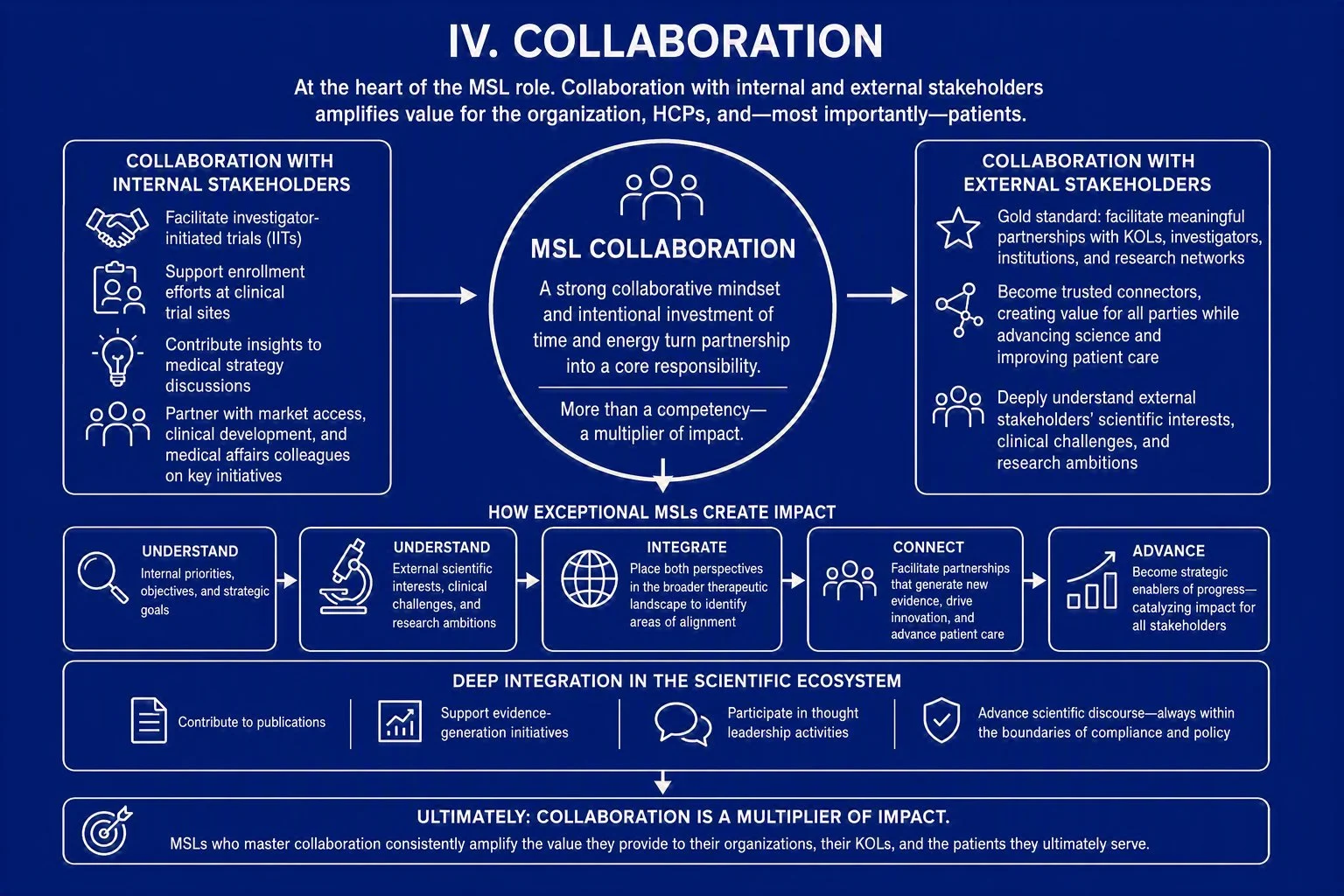
Through strong collaboration MSLs can make great impact.
V. BUSINESS ACUMEN
Business acumen is one of the most misunderstood competencies in the MSL profession. Contrary to common misconceptions, business acumen is not about selling products or influencing prescribing behavior—such activities would be neither appropriate nor compliant for an MSL. Rather, business acumen is about relevance: understanding the broader healthcare ecosystem and ensuring that scientific exchange translates into meaningful outcomes for patients, healthcare providers, and organizations. An MSL with strong business acumen understands how healthcare systems, clinical pathways, payer considerations, institutional priorities, and company objectives intersect. More importantly, they use this knowledge to make scientific interactions more impactful and actionable.
We can define business acumen as the ability to contextualize scientific exchange within the broader healthcare ecosystem and the company lifecycle, enabling the MSL to prioritize high-impact interactions, generate actionable insights, and navigate systemic barriers so that clinical data ultimately translates into improved patient access and outcomes.
From my experience as an MSL manager, individuals with strong business acumen recognize a fundamental truth: even the most compelling science has limited value if it cannot be translated into clinical practice. Scientific excellence alone is not enough. MSLs must understand the factors that influence how, when, and whether patients ultimately receive access to innovative therapies.
This competency can be viewed through four key pillars.
1. Navigating Healthcare Ecosystems
MSLs operate within increasingly complex healthcare environments. While scientific expertise is essential, it must be accompanied by an understanding of the practical realities faced by healthcare providers and institutions.
High-performing MSLs are able to engage healthcare professionals in discussions that extend beyond clinical data and encompass topics such as:

Business acumen is one of the most misunderstood competencies in the medical affairs profession.
Healthcare system dynamics
Reimbursement and payer considerations
Treatment access challenges
Institutional protocols
Administrative and logistical barriers
Health economic considerations
By understanding these factors, MSLs gain valuable insights into the real-world challenges that may prevent patients from benefiting from scientific advances. This allows them to bring meaningful perspectives back to internal stakeholders and contribute to solutions that improve patient care.
2. Resource Optimization and Strategic Territory Planning
One of the most valuable resources available to an MSL is time. Business acumen requires the ability to strategically allocate that time toward activities that create the greatest value. Effective MSLs prioritize engagements that align with both local and global medical objectives. They understand which stakeholders, institutions, studies, and initiatives are likely to generate the greatest scientific and strategic impact.
This involves:
Prioritizing high-value scientific interactions
Developing territory-specific engagement plans
Balancing reactive and proactive activities
Aligning field efforts with broader medical strategy
Investing time where it can have the greatest influence on patient outcomes
Rather than simply maximizing activity volume, strategically minded MSLs focus on maximizing impact.
3. Understanding the Asset Lifecycle and Pipeline Context
Business acumen also requires a deep understanding of where an asset sits within its development and commercialization journey. The role of an MSL supporting an early-stage pipeline asset differs significantly from that of an MSL supporting a recently launched product or a mature, established therapy. The scientific questions, stakeholder needs, evidence-generation priorities, and compliance considerations may all vary depending on the stage of the asset lifecycle. High-performing MSLs understand these distinctions and tailor their activities accordingly. They recognize how scientific exchange can support organizational objectives while remaining firmly grounded in compliance and scientific integrity.
They are able to anticipate questions such as:
What evidence gaps exist at this stage?
What insights are most valuable to internal stakeholders?
What scientific questions are emerging in the field?
How should engagement strategies evolve as the asset matures?
This contextual understanding enables MSLs to be more effective partners to both internal teams and external stakeholders.
4. Cross-Functional Strategic Alignment (Within Compliance Boundaries)
MSLs do not operate in isolation. They work alongside colleagues from medical affairs, clinical development, market access, commercial, regulatory affairs, and other functions that collectively support a product's success. Business acumen requires MSLs to understand the priorities and challenges faced by these stakeholders while maintaining the independence and compliance standards of the medical function.
This includes understanding:
Brand and product strategies
Market access challenges
Clinical trial recruitment priorities
Evidence-generation objectives
Healthcare system barriers
Competitive and therapeutic landscape dynamics
Armed with this context, MSLs can gather highly relevant, compliant field insights that help internal teams make better-informed decisions. In many cases, these insights enable organizations to identify emerging opportunities, address misconceptions, overcome barriers to adoption, and refine medical strategies based on real-world stakeholder perspectives. Importantly, the goal is not to advance commercial objectives, but rather to ensure that scientific understanding of the market is accurate, actionable, and grounded in reality.
Business acumen elevates an MSL from a scientific communicator to a strategic field-based medical leader. It enables the MSL to understand not only the science, but also the systems, stakeholders, and practical realities that determine whether scientific advances ultimately reach patients. The most effective MSLs recognize that great science and business understanding are not competing priorities—they are complementary capabilities. Scientific expertise provides credibility, while business acumen provides context. Together, they enable MSLs to generate meaningful insights, influence strategy, and help ensure that innovative therapies translate into tangible benefits for the patients who need them most.
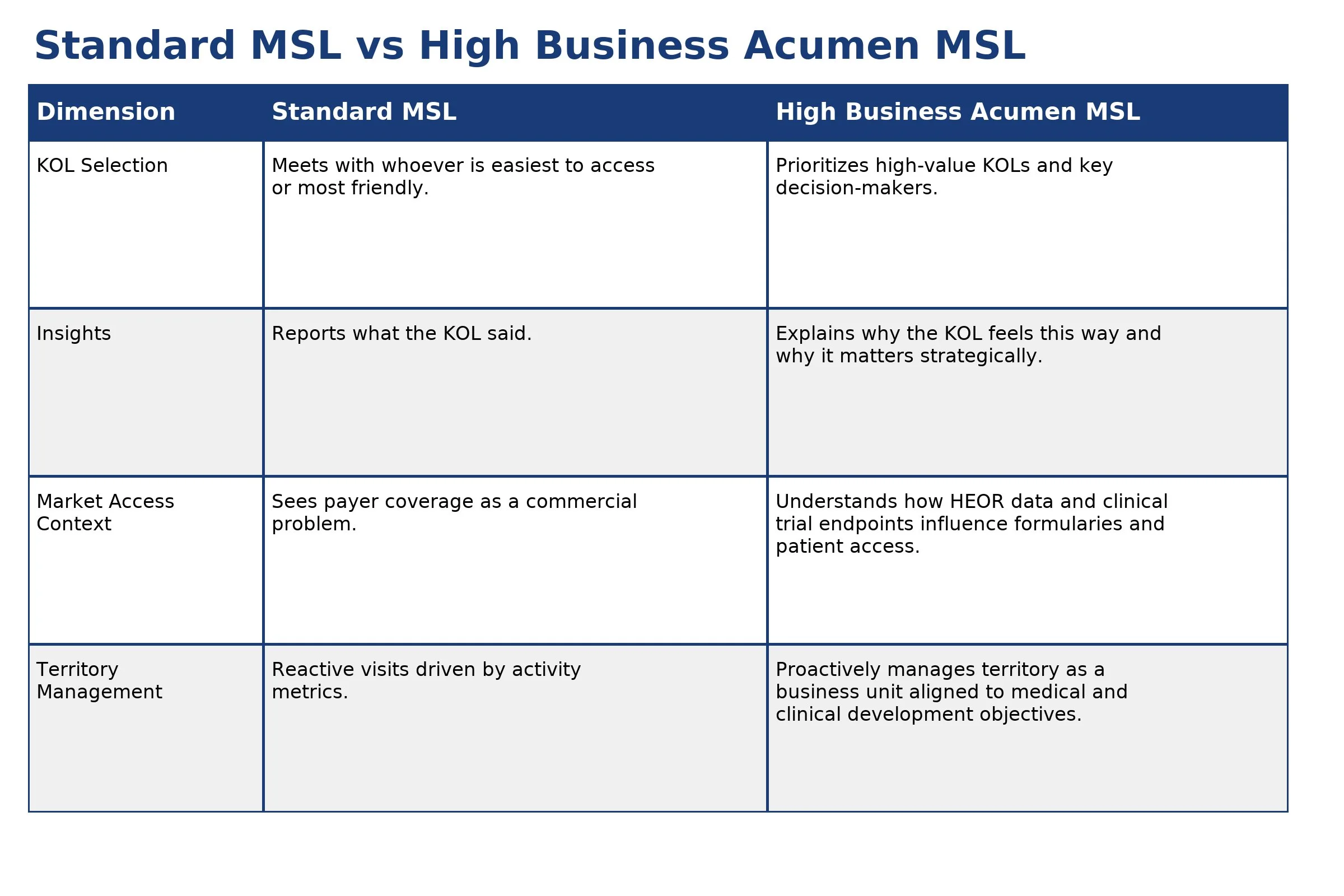
MSL Business Acumen Comparison
VI. COMMUNICATION
If insights are the currency of the MSL role, then communication is the exchange rate that determines their value. Even the most meaningful insight loses impact if it is communicated poorly, while a well-communicated insight can shape strategy, strengthen relationships, and drive action across the organization.
Throughout my career, I have had the privilege of leading high-performing MSL teams. Yet communication remains one of the most difficult competencies to master. It is challenging not only for MSLs but for leaders as well. In fact, in nearly every organization I have been part of, communication has often been cited as an area requiring improvement. Effective communication is rarely perfected—it is a discipline that demands continuous refinement. For MSLs, great communication transcends the medium. Whether the interaction occurs face-to-face, virtually, by telephone, or through email, the underlying principles remain the same.
1. Conciseness
We live in a world where everyone is competing for attention. People are bombarded with emails, meetings, messages, and competing priorities. In such an environment, concise communication becomes a differentiator. The most effective MSLs communicate with clarity and brevity. They understand that being concise does not mean oversimplifying; it means delivering the essential message without unnecessary complexity. Stakeholders should immediately understand the purpose of the communication, the key takeaway, and any required action. Conciseness becomes part of an MSL's professional brand. In a landscape often characterized by excessive verbosity, concise communicators stand out.
2. Accuracy and Precision
MSLs are trusted scientific professionals, and trust is built on accuracy. Every communication should be factual, transparent, balanced, and scientifically sound. At the same time, communication must also be precise. A stakeholder reading an email or listening to a presentation should not be left wondering what was meant or what action is required. Precision minimizes ambiguity and prevents misunderstanding.
I often share advice that was given to me by one of my graduate school advisors:
"Your writing should read like a Hemingway novel."
Simple. Concise. Clear. Nothing important omitted. Nothing unnecessary included. The same principle applies to field insights, medical communications, and scientific discussions. The goal is not to impress stakeholders with complexity; the goal is to communicate effectively. Communication is often viewed as the ability to speak well. In reality, exceptional communication begins with listening. MSLs are not only providers of scientific information; they are also recipients of valuable information from healthcare professionals, investigators, and internal stakeholders. The ability to listen deeply and synthesize information is therefore one of the most important communication skills an MSL can develop.
Great listeners pay attention not only to words but also to subtle cues, including:
Changes in tone
Pauses and hesitation
Body language
Facial expressions
Emphasis and inflection
What is not being said
These observations often provide context that is just as important as the spoken message. The most effective MSLs are fully present during conversations. They maintain eye contact, actively engage, and focus entirely on understanding the stakeholder's perspective. Their attention is directed toward the individual in front of them rather than toward their notebook.
After the interaction, they are able to accurately reconstruct and synthesize the conversation into actionable insights. Why is this important? Human attention is finite. When we are actively taking detailed notes, a portion of our attention is diverted away from the conversation itself. While we may believe we are multitasking, cognitive science suggests that what we are actually doing is rapidly switching attention between tasks, often reducing performance in both. For this reason, many highly experienced MSLs adopt a minimalist note-taking approach during meetings. Rather than attempting to document every detail in real time, they may jot down only a few keywords or prompts that help trigger recall after the discussion is complete. This allows them to remain fully engaged in the human interaction while still capturing key information afterward. The goal is not the elimination of note-taking but rather the optimization of presence, connection, and active listening.
Manager's Corner
Communication is one of the most important competencies managers are responsible for developing within their teams. Managers influence communication through team meetings, one-on-one coaching, field rides, and most importantly, by modeling effective communication themselves. Like any competency, communication improves through deliberate practice, observation, and feedback. Unfortunately, many managers struggle with communication themselves and may not actively invest in improving their own skills. This creates an opportunity for senior leaders to model effective communication and coach managers in turn. Organizations that invest in strong communication frameworks often benefit from improved productivity, stronger alignment, and more effective execution of strategy.
One area where I frequently coach early-career MSLs involves note-taking during KOL interactions. Newer MSLs often feel compelled to document everything for fear of missing valuable insights. In doing so, however, they may miss the nuances of the conversation itself—the body language, emphasis, tone, and interpersonal connection that give context to the discussion. I often encourage MSLs to keep a notebook available as a sign of respect and preparedness, but to limit in-meeting notes to a few key words or phrases whenever possible. This approach allows them to remain engaged while preserving enough cues to accurately document the discussion afterward. As MSLs gain experience, deepen their therapeutic expertise, and build stronger relationships with KOLs, many become remarkably skilled at retaining and synthesizing information in real time. Following a meeting, they can often reconstruct the key points, identify emerging themes, and convert observations into actionable insights with impressive accuracy.
References:
Goleman, D. (1998). Working with Emotional Intelligence. New York, NY: Bantam Books.
Note on use of AI:
Six effortless MSL competencies were creatively developed based on professional experience and the ideas originated herein are original to the best of our knowledge. All ideas were developed by Mirza Peljto, PhD and the Field Medical Center of Excellence. Once the ideas were developed, initial text was produced by Dr. Mirza Peljto. Further reiterative method was used in collaboration with AI platform, Gemini by Google to expand on the ideas (2026, July 21 version) [Large language model]. https://gemini.google.com/.
Once the fascicle was fully written, the final version was proofread by Microsoft Copilot (GPT-5-based large language model) [Large language model]. https://copilot.microsoft.com Microsoft (2026) with any subsequent minor editorial changes. Microsoft Copilot was used to assist with editorial review, grammar correction, and stylistic refinement. All conceptual content, framework development, and scientific interpretations originated from the author and were independently reviewed prior to publication.

FOUR CORE MSL COMPETENCIES
There are four core MSL competencies: adaptability, clinical acumen, relational intelligence, and resilience (work ethic). Here, we look at each of these four competencies and provide a larger framework for evaluating these by MSL managers.
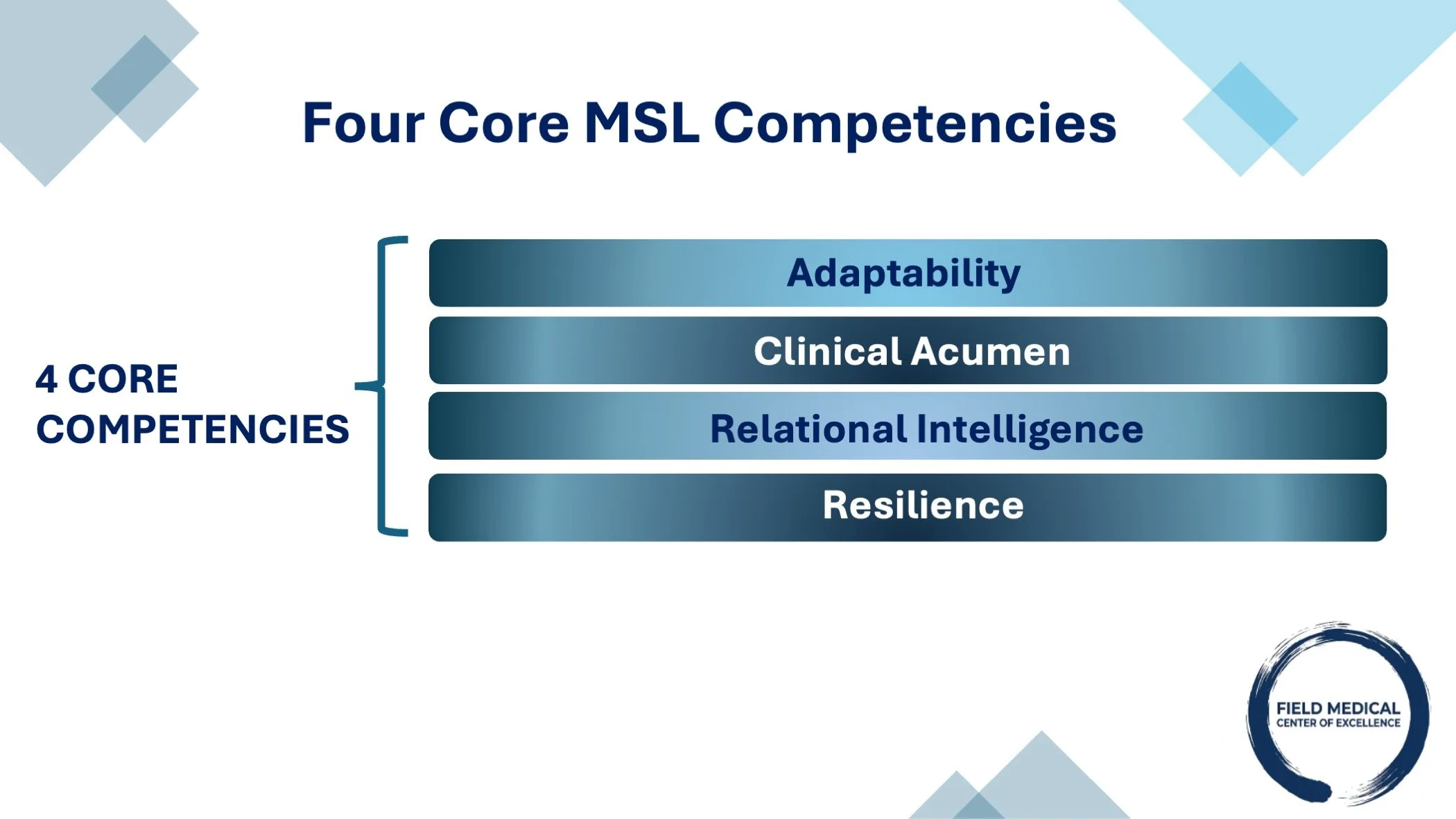
Four Core MSL Competencies
ADAPTABILITY
Being adaptable is the first of the four core competencies for Medical Science Liaisons (MSLs) to master in order to excel in their profession. Adaptability can be defined in many ways, but in the context of an MSL, a practical definition would look like this: the ability to dynamically pivot focus, execution, and communication style.
Adaptability is a key trait ensuring professional maturity, and its relevance extends far beyond the MSL role. Embodying this trait implies not only being open to diverse viewpoints and experiences but also being able to change direction ad hoc. Most importantly, along with openness and flexibility, being adaptable translates into being perceived as "easy to work with" by both external and internal stakeholders.
There are numerous examples of how adaptability serves as a demonstrated strength within Medical Affairs. For instance, a team may be supporting an upcoming medical launch, but the Phase III clinical study does not yield results positive enough to warrant a full approval. This moment requires a swift shift in both strategy and execution; being adaptable in this context benefits not only the individual contributor but the entire team.
Another clear example of adaptability specific to the MSL role is the ability to quickly adapt to the social style of a thought leader. Based on personal observations in the field, roughly 90% of MSLs struggle to do this well. Most MSLs remain in the same operational mode regardless of who they are engaging. Because these communication behaviors are highly conditioned, this is often the most difficult core competency for MSL managers to coach.
We have all faced situations where yesterday's top priority is no longer today's priority. By remaining adaptable, we are able to shift gears and focus on what matters most. Those who master this core competency are generally viewed as leaders on the team and are frequently given high-impact, high-visibility development opportunities by leadership. Ultimately, projecting calm and demonstrating adaptability not only helps the individual achieve their objectives with all stakeholders, but it also ensures the integrity of relationships and elevates the entire MSL team.
Throughout my career, I have had the privilege of leading MSLs who possessed an extraordinary capacity for adaptability. Navigating ambiguity with ease, these individuals consistently maintained a solution-oriented, optimistic mindset. Many have since ascended into leadership roles, distinguishing themselves as highly accomplished Medical Affairs executives. When looking back at their career trajectories, the mastery of adaptability was the definitive trait that set them apart.

Being adaptable is one of the core competencies of being an excellent MSL.
Manager Corner
MSLs who command a high degree of adaptability consistently manifest the following key behavioral indicators:
Pivots communication and engagement styles in real time: Accurately and efficiently diagnoses a Key Opinion Leader's (KOL) preferred data delivery format and social profile, seamlessly shifting from granular, analytical data dissection to macro-level clinical utility based on stakeholder preference.
Proactively realigns territory tactics and strategic plans: Rapidly adapts local operational management and tactical positioning when unexpected market disruptions occur—such as sudden competitor data readouts, a shifting clinical trials landscape, or altered regulatory timelines.
Demonstrates intellectual agility in response to evolving clinical paradigms: Rapidly assimilates, synthesizes, and masters complex new clinical data or therapeutic indications that fall outside of their primary comfort zone or historical area of expertise.
Models resilience and serves as a stabilizing influence: Projects a solution-oriented, anchoring presence across both internal cross-functional groups and external teams during periods of organizational restructuring, territory realignments, or sudden strategic shifts in a product launch lifecycle.

Clinical acumen is a core MSL competency.
CLINICAL ACUMEN
When building new teams as a hiring manager, I interviewed a high volume of candidates across the entire US territory. As a young manager, I took a chance on a few MSLs fresh from graduate studies or with minimal experience directly relevant to the MSL role. While they possessed other strong core competencies, they initially lacked deep clinical acumen. However, over time, a remarkable transformation occurred: these individuals became the "unicorns" of my team. They began to outperform more seasoned MSLs across every available metric, including the quality of field insights, stakeholder engagement, internal collaboration, and overall volume of meaningful interactions.
So, what exactly is clinical acumen, and how should we define it? In the field, practical, dynamic definitions are often more helpful than rigid ones. Clinical acumen is far more than just "knowing the data." It is the core competency that allows an MSL to seamlessly translate medical evidence into clinically impactful insights, establishing peer-to-peer credibility with thought leaders and ultimately improving patient healthcare.
To fully understand this competency, we can break it down into three distinct dimensions:
Total Therapeutic Area Literacy
The first aspect of clinical acumen goes beyond knowledge of individual products or a single company’s pipeline; it requires total therapeutic area literacy. In other words, an MSL must become an expert in the entire disease state, not just their own company's molecules. For example, an MSL needs to thoroughly understand the underlying pathophysiology, the historical evolution of the standard of care, and the mechanisms of action of competitor pipelines. While a low-acumen MSL may simply quote their product’s prescribing information, a high-acumen MSL discuss how new data fits into the broader, real-world treatment paradigm.
Methodological Fluency & Critical Evaluation
Second, high clinical acumen demands that an MSL critically evaluate emerging data and maintain complete methodological fluency regarding clinical trials. An MSL must possess a deep understanding of trial design, clinical endpoints, statistical analysis, and post-approval real-world evidence (RWE). This fluency matters immensely because Key Opinion Leaders (KOLs) do not want slide decks simply read to them; they want to debate the underlying trial methodology. When an MSL can seamlessly discuss hazard ratios, confidence intervals, or patient baseline characteristics, their peer-to-peer credibility skyrockets.
Answering the "So What?" Question
Third, an MSL must be able to efficiently and convincingly answer the definitive "so what?" question. They must readily address the unspoken query every clinician has: "How does this study change the way I treat the patient sitting in front of me tomorrow morning?" Answering this requires a sophisticated understanding of the real-world implications of clinical data, specifically regarding:
Understanding patient segmentation.
Identifying which patient populations stand to benefit most from the data.
Recognizing which patient segments may be at a higher risk for adverse effects.
Cultivating Acumen at Medical Congresses
One of the most effective ways for MSLs to develop and maintain their clinical acumen is through active engagement during high-impact medical congresses. Unfortunately, many MSLs—and even their managers—fail to fully engage when attending these events, often treating them as passive obligations. To truly build acumen, it is vital for an MSL to intentionally attend scientific sessions and congress presentations that extend well beyond their own company-sponsored data, allowing them to absorb competitive updates and broader therapeutic trends firsthand.
Manager Corner
MSLs who command a high degree of clinical acumen consistently manifest the following key behavioral indicators:
Critically appraises peer-reviewed literature to identify subtle clinical nuances, emerging data gaps, and safety considerations.
Formulates balanced, scientifically rigorous responses to complex, unsolicited off-label inquiries from healthcare providers.
Proactively monitors and synthesizes competitive data, pipeline developments, and shifting clinical guidelines.
Delivers high-impact presentations that masterfully contextualize complex clinical data for both internal and external stakeholders.
Serves as an authoritative therapeutic area resource, providing strategic scientific expertise to immediate peers and home office colleagues alike.
RELATIONAL INTELLIGENCE
The volume of external and internal stakeholders an MSL engages with is exceptionally high compared to almost any other role in the pharmaceutical industry. Relational Intelligence (RQ) is the capacity to compliantly navigate, build, and sustain complex, long-term, peer-to-peer relationships across these diverse stakeholder ecosystems. This core competency requires the deliberate application of interpersonal insight, strategic empathy, and communication agility to establish deep, mutually beneficial partnerships with healthcare providers, researchers, and internal cross-functional colleagues. Ultimately, Relational Intelligence is the definitive skill that transforms transactional field interactions into sustained, trusted scientific collaborations.
To understand its operational value, Relational Intelligence can be broken down into distinct layers that demonstrate why it is a master-level skill:
1. Navigating Complex Dynamics and High-Profile Personalities with Top-Tier KOLs
MSLs consistently interface with world-renowned experts, department chairs, and principal investigators who sit at the very pinnacle of their respective fields. High-RQ MSLs successfully engage with these high-profile personalities and strong egos without becoming intimidated or overly sycophantic. This requires a grounded professional confidence. When executed correctly, the dynamic shifts from a passive, unidirectional presentation to an active, peer-to-peer partnership focused on solving complex clinical challenges.
Furthermore, an MSL with a high degree of Relational Intelligence uncovers exactly what an individual Key Opinion Leader (KOL) values. While one investigator may be driven by abstract publications and clinical trial design, another physician might be deeply focused on community health equity and patient access. Relational Intelligence centers on identifying these unique drivers and tailoring the scientific relationship around them.
2. Understanding the Broader KOL and Institutional Ecosystem
Comprehending the overarching framework of hospital systems, how physicians deliver care within their clinics, and the vital roles of supporting staff (such as mid-level providers and clinic coordinators) directly amplifies an MSL's field effectiveness. This systemic awareness translates into how seamlessly an MSL manages the timing and cadence of their communications. A relationally intelligent MSL respects the context of major medical congresses, a KOL’s clinical schedule, and their preferred channels of engagement. Treating both KOLs and their clinical staff with the utmost professional respect within their patient-facing environments is foundational.
Every medical institution operates under distinct logistical parameters. From navigating physical clinic spaces to understanding the nuances of how and when to schedule an interaction, an MSL must remain highly attentive to institutional details. Remaining keen on these subtle nuances ensures smooth, compliant engagement with an individual site or KOL. Utilizing a digitized framework or CRM platform to document these institutional preferences ensures not only continuity of institutional knowledge, but also a seamless, premium experience for the stakeholder over time.
3. Mastering the "Social Styles"
This point connects directly back to Adaptability as a core competency. As previously highlighted, the vast majority of MSLs struggle to adapt to the distinct social styles of thought leaders. An MSL with high Relational Intelligence can quickly diagnose a stakeholder's communication preferences.
While social styles are traditionally categorized into specific profiles—analytical, driver, amiable, and expressive—the reality is that most KOLs display a fluid mix of these traits depending heavily on the clinical or professional context. An MSL must possess the agility to adapt to these nuances in real time to ensure high engagement during an interaction. This capability sits at the intersection of Relational Intelligence and the MSL's broader emotional quotient (EQ).
4. Managing Internal Stakeholders
Just as an MSL must drive meaningful value for external KOLs, achieving excellence in the role requires delivering equal value to an ever-changing landscape of internal stakeholders. An MSL must effectively navigate and manage partnerships across internal, cross-functional boundaries, including Clinical Operations, Commercial teams, Home Office Medical Affairs, and Translational Medicine.
Equipped with high Relational Intelligence, an MSL seamlessly bridges the external and internal environments. They ensure that compliant field insights are effectively communicated back to the organization while skillfully advocating for their territory's strategic needs without causing cross-functional friction. Ultimately, these individuals serve as trusted enterprise partners both inside and outside the company walls.
The Transactional vs. Relational MSL
We can fundamentally categorize MSLs into two distinct groups based on their level of Relational Intelligence: the "Transactional" MSL and the "Relational" MSL.

Relational MSLs have deep relationships in the field.
The Transactional MSL operates on a checklist mentality. They secure a meeting, deliver a standard slide deck, document the interaction in the CRM system to check a box, and essentially disappear until the next major data readout.
The Relational MSL treats the relationship as a continuous scientific dialogue. They remember a specific clinical challenge a KOL mentioned six months prior, proactively and compliantly follow up with a newly published independent study, and maintain a sustained partnership built on ongoing scientific exchange.
Manager Corner
MSLs who command a high degree of Relational Intelligence consistently manifest the following observable behaviors in the field:
Seamlessly decodes and adapts to the diverse social styles, personalities, and operational constraints presented by both external and internal stakeholders.
Cultivates deep, peer-to-peer relationships and robust scientific partnerships anchored in mutual trust, objective data exchange, and long-term strategic value creation.
RESILIENCE (WORK ETHIC)
Exceptional Medical Science Liaisons (MSLs) possess the operational stamina and emotional resilience needed to thrive in a highly autonomous environment, navigate frequent rejection, and sustain high performance despite the physical and mental demands of extensive travel. The MSL role is widely regarded as one of the most challenging—yet rewarding—positions within the biopharmaceutical industry. As such, resilience and work ethic are foundational competencies that enable MSLs to remain self-motivated, disciplined, and strategically focused without requiring constant managerial oversight.
Several key pillars define resilience and work ethic within the MSL profession.
1. Navigating Autonomy
A defining characteristic of the MSL role is the significant degree of independence it affords. In many respects, an MSL serves as the CEO of their territory. Unlike many corporate functions, there is no manager directing day-to-day activities or closely monitoring how time is allocated. High-performing MSLs recognize that this autonomy is a privilege that demands accountability and self-discipline.
These individuals develop and execute thoughtful territory plans, optimize their schedules, and leverage time between engagements productively. They proactively identify, map, and cultivate new stakeholder relationships while continuously advancing strategic objectives. In contrast, a weak work ethic in a highly autonomous environment often manifests as passive territory management, excessive reliance on direction from others, and limited initiative in identifying opportunities for meaningful engagement.
2. Managing Rejection Effectively
Rejection is an inherent aspect of field medical work. As physicians and key opinion leaders (KOLs) face competing demands on their time, engagement opportunities are not always readily available. Rejection can take many forms, including unanswered outreach emails, cancelled meetings, shortened discussions due to patient care responsibilities, or prolonged periods of limited responsiveness.
Field medical professionals routinely encounter these small but persistent setbacks. Resilient MSLs understand that such situations are rarely personal. They remain mindful that physicians' primary responsibility is patient care—not interaction with industry representatives. Rather than becoming discouraged, they adapt their engagement strategies, refine their outreach approaches, and identify alternative, compliant ways to deliver value to stakeholders. Their perseverance enables them to maintain momentum and continue building meaningful professional relationships over time.
3. Managing the Physical and Mental Demands of Travel
For many MSLs, field-based responsibilities require spending more than 70% of working time traveling. This may include individual KOL engagements, regional and national meetings, weekend conference coverage, and week-long congresses. While territory size varies, travel remains a central component of the profession.
The burden can be especially significant in large territories, such as those frequently found in the Western United States. Extensive travel often involves overnight hotel stays, frequent dining on the road, long-distance driving, delayed flights, missed connections, late hotel check-ins, changing time zones, and extended periods away from home. Over time, these challenges can place considerable strain on both physical and mental well-being.
Resilience in this context means maintaining intellectual preparedness, professional presence, and strategic focus despite fatigue and disruption. High-performing MSLs are deliberate in managing their energy and personal well-being. They consistently demonstrate enthusiasm, scientific credibility, and composure, whether engaging with a community physician or presenting to academic leaders and department chairs immediately after a demanding travel day.
Conversely, MSLs with lower levels of resilience and work ethic often view travel challenges and rejection as obstacles that diminish motivation. Their fatigue becomes visible in stakeholder interactions, and they tend to react to circumstances rather than proactively manage their territories.
By contrast, highly resilient MSLs serve as Strategic Field Anchors. They view autonomy, rejection, and travel as variables to be managed rather than barriers to success. They maintain a consistently professional presence with internal and external stakeholders, use setbacks as opportunities to refine their approach, and maximize productivity even during travel disruptions. For example, flight delays may become opportunities to review literature, prepare for upcoming engagements, or address strategic territory needs.
Manager Corner
MSLs who demonstrate strong resilience and work ethic commonly exhibit the following behaviors:
Consistently execute strategic territory plans and proactively engage KOLs with minimal managerial oversight.
Respond to rejection by adapting engagement strategies while maintaining motivation, professionalism, and persistence.
Effectively manage personal energy and well-being, maintaining poise, credibility, and productivity across all internal and external stakeholder interactions.
Demonstrate accountability, ownership, and self-discipline in a highly autonomous working environment.
Remain focused on long-term territory objectives despite operational challenges, travel demands, or temporary setbacks.

Having resilience and strong work ethic are key to having a successful career as an MSL.
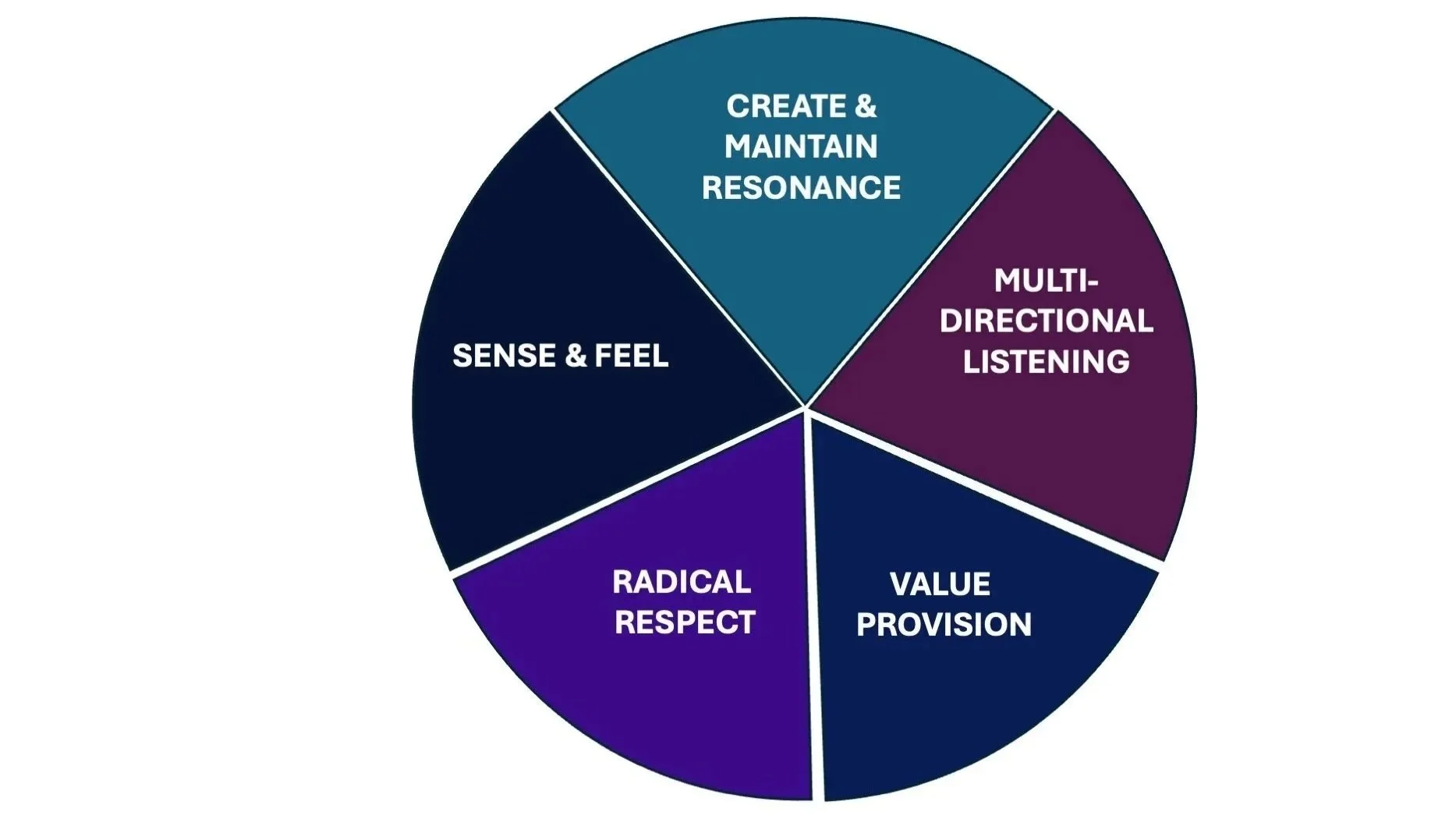
The Art of Medical and Scientific Exchange: A New Model of Engagement
The goal of every medical affairs professional is to establish seamless interactions with healthcare providers (HCPs), provide meaningful value by serving as a trusted scientific expert, and cultivate long-term, peer-to-peer relationships with thought leaders. When done effectively, these interactions naturally lead to impactful insights and meaningful scientific exchange, benefiting both the organization and the broader healthcare community.
Here, we propose a powerful new model for medical affairs engagement with HCPs that extends beyond transactional data exchange. Unlike rigid, linear engagement models, this framework acknowledges the inherent uncertainty present in every HCP interaction and accounts for it through nuanced, human-centered engagement characterized by both scientific rigor and interpersonal artistry.
Introduction
We live in an era of information overload. This is especially true for physicians, who are not only focused on delivering high-quality patient care but are also confronted with the rapid expansion of therapeutic options and the continuous evolution of clinical evidence. Similarly, medical affairs professionals (e.g., Medical Science Liaisons [MSLs]) face an ever-growing volume of clinical data generated by both their own organizations and competing companies. Given this environment, a purely transactional approach to medical and scientific exchange with healthcare professionals is no longer sufficient.
Successful engagement with HCPs involves far more than simply delivering data and asking a series of predetermined questions in search of “gold-nugget” insights. Relationships with thought leaders should be viewed as a shared intellectual journey in which both parties derive value from the exchange. This model assumes that the medical affairs professional is exceptionally well prepared for each engagement. It calls for elevating medical and scientific exchange (MSE) from a set of mechanistic processes to a more expressive and interpersonal discipline centered on relational intelligence. The necessary paradigm shift is from merely delivering data to mastering the critical elements of human engagement.
Our framework, visualized here, defines MSE as an active and integrated process built upon five foundational pillars. The model assumes that the medical affairs professional is thoroughly prepared for the interaction and capable of dynamically adapting to the needs of the discussion. The central thesis of this framework is that scientific data does not merely exist—it must resonate in order to become actionable. Equally important is the recognition that the five components do not operate in a linear sequence. Rather, they remain continuously present throughout the interaction, with attention shifting dynamically among them as the conversation evolves.

Effective engaging with the thought leaders in the field is an application of a true human artistic skill.
The Five Pillars of Masterful Engagement
1. Sense & Feel: Context as the Foundation
The meeting begins long before the first question is asked. The first pillar, Sense & Feel, centers on pre-engagement awareness and an appreciation of the environment surrounding the interaction. The MSL must be able to read the room, understand the situation, and interpret the broader context quickly and accurately. This ability requires patience, practice, and continual refinement.
Paradoxically, developing this skill often requires slowing down. By slowing both physical movement and attention, we become more aware of our surroundings and are better able to perceive subtle but important details. It is essential to first understand the immediate physical space and take a moment to appreciate it. For example, is the meeting taking place in an open office where others may overhear the conversation? Are there carefully arranged flowers on the conference table? Simply taking a moment to appreciate the space—whatever form it takes—can foster attentiveness, presence, and connection.
Additional elements that fall within the Sense & Feel pillar include:
Reading the social style of the thought leader.
Appreciating their energy and state of mind (e.g., do they appear more stressed than usual?).
Assessing the urgency—or lack thereof—surrounding the discussion.
Recognizing other situational factors that may influence the interaction.
Indeed, any aspect of situational awareness belongs within the Sense & Feel pillar. Cultivating this awareness requires a calm and focused mind—one that is not fixated on any single detail while remaining receptive to everything that is perceptible in the environment.
2. Create and Maintain A Field of Resonance
If we think of scientific exchange as a dance, resonance is the music that moves the dancers. This pillar recognizes that, as the medical affairs professional, you are largely responsible for the energy and atmosphere of the interaction. Your role is not merely to participate in the exchange but to actively shape the environment and bring your best self to every single engagement. This can be achieved by several means:
I. Create Respect for Space. A key principle is becoming comfortable with moments of silence and allowing them to occur naturally. Often, this means resisting the urge to rush into complex or potentially tense discussions. Instead, allow conversations to unfold organically and at an appropriate pace.
II. Create Warmth. Everyone—including the world's leading physicians—benefits from warmth and genuine human connection. As an MSL, you have the opportunity to bring that sense of connection into the interaction. Doing so requires authentic emotional intelligence, a deep appreciation for the complexity of physicians' professional lives, empathy, and a sincere interest in their humanity. Sometimes this is as simple as offering a warm smile, maintaining a calm demeanor, and creating an atmosphere of ease and openness.
III. Don't Disrupt the Flow
Every human interaction contains an element of uncertainty. We rarely know exactly what will happen next or where the conversation will lead. Effective engagement requires embracing that uncertainty and allowing the discussion to flow naturally. This often means setting aside personal agendas (and even elements of a company's agenda to allow the exchange to develop organically rather than rigidly following predetermined checkpoints. To avoid fragmented discussions and to help ensure that the conversation remains productive, objectives and topics of interest can be aligned with the thought leader before the engagement begins. This represents a best practice for facilitating meaningful exchange while preserving conversational flow. If doing so, it is a great idea to always address the points that are important to the thought leader first on the agenda being mindful of their seriousness.
Maintain Warm Agreeableness
This may be the most important principle of all. Medical affairs professionals should strive to maintain a posture of warm agreeableness throughout every interaction. The truth is that everyone in the pharmaceutical and diagnostics industry, along with patients and staff, are all competing for physician’s time and their attention. Even if the scientific disagreements arise, it is entirely possible—and indeed necessary—to remain respectful, open-minded, and constructive while preserving the relationship in its entirety. Also it is essential to always be protective of thought leader dignity and honesty. Organizations, roles, and even therapeutic areas may change over the course of one’s career, but meaningful professional relationships should ideally endure the test of time.
The five components do not operate in a linear sequence. They remain continuously present throughout the interaction, with attention shifting dynamically among them as the conversation evolves.
3. Multi-Directional Listening: Going Beyond Active Listening
Active listening is often described as listening attentively while waiting for an opportunity to speak. In practice, however, it can sometimes become little more than preparing a scripted response while another person is talking. This is not true listening. ‘True listening’ or multi-directional listening is an elevation of this foundational skill. It involves the simultaneous ability to direct attention toward three distinct dimensions:
Internal (The “What”). One aspect of attention is focused on the explicit information being presented.
Contextual (The “Why” and the “How”). Second aspect of attention is focused on listening for emotional tone, level of conviction, and potential underlying motivations behind the perspective being shared.
Implicit (The “What’s Unsaid”). The ability to discern subtle cues, pauses, hesitations, and omissions in order to appreciate potential gaps in knowledge, unmet needs, or strategic challenges.
This level of multi-directional listening requires genuine curiosity and an unbiased mind. It also requires the previous pillar #2 of creating and maintaining a field of resonance. Such openness allows the listener to understand not only what was said, but also the broader professional perspective from which those views emerged. Like the other pillars, this skill requires self-awareness, continual refinement, and deliberate practice. This is the sauce that the best medical insights are made with.
4. Radical Respect: A Posture of Humility and Dignity
Deep respect for the thought leader is the cornerstone of trust. This is not merely a matter of polite deference, but rather a profound form of professional respect that is both earned and reciprocated. Any resistance toward postures of radical respect toward healthcare providers requires further introspection and developing a deeper understanding of the profession and complexities of giving patient care. Contrary to what many may believe, a posture of radical respect should not be something displayed only during a one-on-one or group meeting with a thought leader. Rather, it should be a visible and enduring attitude toward the thought leader's work, their time, their expertise, and their perspectives. Medical affairs professionals that interface with external thought leaders also have the ability to advocate for their thought leaders as well as the broader professional field. Part of the medical affairs professional's role is to help elevate internal teams to this same level of appreciation. Home-office teams can sometimes become disconnected from the realities of clinical practice and the daily demands placed on physicians. It is therefore essential to serve as a bridge, helping colleagues understand and appreciate the complexity of physicians' professional lives. Your responsibility is to honor the years of dedication that brought physicians to their current position and to recognize the unique challenges they face. When interactions are grounded in genuine respect, scientific contributions are more likely to be received not as challenges or corrections, but as opportunities for partnership and collaboration.
5. Value Provision: The Artistic Execution of Insight
While the previous pillars build the vessel, the Value Provision pillar represents the true medicine within it. Once you have sensed the need, created resonance, listened deeply, and established trust, you are positioned to deliver value with precision. Value provision is not simply about sharing the latest publication or periodically discussing clinical data. Rather, it involves providing insights that directly address the specific context and needs of the individual thought leader.
This value can take many forms, including—but not limited to:
Connecting current challenges to relevant scientific literature.
Providing strategic perspectives on emerging trends observed at international congresses.
Facilitating connections with other experts or collaborators.
Helping contextualize clinical observations within the broader body of medical evidence.
Identifying gaps, opportunities, or areas for future exploration.
Providing broader large congress overviews to physicians who are unable to attend.
This pillar represents the culmination of the model. It is the moment when an interaction evolves from a conversation into a truly actionable, bilateral intellectual partnership. Finally, sometimes even a small spark along the value provision spectrum can initiate large scale collaborations, publications, and clinical studies. Examples of such stories from the field are innumerable.
Conclusion
By conceptualizing medical and scientific exchange through this artistic lens, we transform the nature of our interactions in the field. We move beyond serving merely as conduits of information and become trusted scientific peers and collaborative partners.
Operating through these five pillars enables more meaningful dialogue, deeper scientific discussions, stronger strategic partnerships, and more impactful insights. Ultimately, this approach creates value not only for physicians and healthcare systems but, most importantly, for the patients they serve.
References:
The scientific exchange model developed and the ideas originated herein are original to the best of our knowledge and were developed by Mirza Peljto, PhD and the Field Medical Center of Excellence. Once the model was developed and conceptualized, it was further reiterated in collaboration with AI platform, Gemini by Google (2026, June 24 version) [Large language model]. https://gemini.google.com/. Microsoft. (2026).
Once the fascicle was fully written, the final version was proofread by Microsoft Copilot (GPT-5-based large language model) [Large language model]. https://copilot.microsoft.com with any subsequent minor editorial changes. Microsoft Copilot was used to assist with editorial review, grammar correction, and stylistic refinement. All conceptual content, framework development, and scientific interpretations originated from the author and were independently reviewed prior to submission.

Field Medical Burnout — and What to Do About It
Burnout in field medical is often difficult to recognize early because high-performing professionals tend to normalize overextension. In many organizations, MSLs are trusted to operate autonomously with minimal oversight — a management approach that highly experienced field professionals often appreciate. However, autonomy without adequate support structures can unintentionally create an environment where workload creep, blurred boundaries, and chronic stress go unaddressed.
Medical Science Liaisons (MSLs) are among the most dedicated and resilient professionals in the pharmaceutical and biotechnology industries. The role demands constant engagement with healthcare professionals, scientific exchange in the field, extensive travel, congress attendance, strategic planning, and internal collaboration — all while maintaining a high level of scientific expertise and professionalism.
While rewarding, the field medical profession can also be uniquely demanding. Many MSLs spend weeks away from home, balancing travel schedules, shifting priorities, and increasing performance expectations. Extended periods of operating at this pace can gradually lead to physical exhaustion, emotional fatigue, disengagement, and ultimately burnout.
Burnout in field medical is often difficult to recognize early because high-performing professionals tend to normalize overextension. In many organizations, MSLs are trusted to operate autonomously with minimal oversight — a management approach that highly experienced field professionals often appreciate. However, autonomy without adequate support structures can unintentionally create an environment where workload creep, blurred boundaries, and chronic stress go unaddressed.
Compounding the issue is the increasing pressure surrounding metrics and performance expectations. In some organizations, field medical teams are evaluated primarily through quantitative activity measures that fail to account for territory complexity, geographical realities, relationship depth, or scientific impact. The result is that many professionals silently absorb unsustainable workloads in an effort to meet expectations.
The reality is simple: burnout is not a personal weakness. It is an occupational risk within high-demand field-based roles. Left unmanaged, it can affect physical health, emotional well-being, relationships, effectiveness at work, and long-term career sustainability.
The encouraging news is that burnout is preventable — and recoverable — when individuals and organizations intentionally prioritize sustainable performance.
A Practical Burnout Prevention Toolkit for MSLs
Over years of mentoring and coaching field medical professionals and managers, several practical strategies have consistently proven effective in supporting long-term well-being and resilience.
1. Cultivate an Identity Beyond Work
One of the most important protective factors against burnout is having a meaningful life outside of work.
A hobby — particularly one that is engaging, creative, physical, or restorative — provides psychological distance from professional stressors. Whether it is exercise, music, painting, hiking, gardening, photography, cooking, or learning a new skill, intentional engagement outside of work helps prevent personal identity from becoming entirely tied to professional performance.
For field medical professionals whose schedules are heavily work-centered, this is not a luxury; it is a necessity.
2. Develop a Sustainable Recovery Practice
Recovery does not always mean formal meditation or extended time away. It means intentionally creating moments that calm the nervous system and restore mental clarity.
This may include:
Walking without distractions
Spending time outdoors
Mindfulness or breathing exercises
Prayer or reflective practices
Exercise and movement
Journaling
Reading for enjoyment
Taking quiet, technology-free time
The goal is not perfection. The goal is consistency. Even small, repeated recovery practices can significantly reduce cumulative stress over time.
3. Learn to “Turn Work Off”
After a major congress, extended travel period, or intense series of meetings, many MSLs immediately transition back into emails, internal meetings, reporting responsibilities, and planning activities without decompression time. Continuous engagement without recovery eventually leads to diminished effectiveness. High-performing professionals benefit from building intentional off-ramps after demanding work periods. This may involve:
Scheduling lighter administrative days after congresses
Blocking recovery time after travel
Avoiding unnecessary evening commitments
Delaying non-urgent follow-up activities
Taking PTO proactively instead of reactively
Sustainable performance requires recovery cycles.
4. Establish and Protect Boundaries
Strong boundaries are essential in field medical roles where work can easily expand into evenings, weekends, airport time, and personal hours.
Healthy boundaries may include:
Defining communication availability
Limiting non-urgent after-hours responses
Protecting personal and family time
Avoiding unnecessary travel stacking
Scheduling uninterrupted focus time
Taking lunch breaks away from screens
Importantly, boundaries must be communicated clearly and reinforced consistently. Professionalism does not require constant accessibility.
5. Own and Intentionally Manage Your Schedule
Field medical professionals often operate with significant autonomy. While empowering, this also requires discipline in workload management.
Effective MSLs proactively structure their schedules to reduce unnecessary stress by:
Clustering meetings geographically
Minimizing inefficient travel patterns
Building administrative catch-up blocks into the week
Scheduling recovery time after travel
Protecting calendar space for strategic work
Avoiding overcommitment whenever possible
Reactive scheduling is one of the fastest pathways to burnout. Intentional scheduling creates sustainability.
What Managers and Organizations Can Do Better
Preventing burnout is not solely the responsibility of individual employees. Organizations and field medical leaders play a critical role in shaping sustainable work environments.
1. Protect Deep Work Time
Field medical teams are increasingly consumed by internal meetings, status updates, and administrative demands.
Managers can reduce cognitive overload by implementing:
“No Meeting” blocks or days
Protected strategic planning time
Reduced low-value internal meetings
Clear prioritization frameworks
Better alignment across cross-functional stakeholders
A manager’s role is not simply to drive productivity — it is also to protect the team’s long-term effectiveness and well-being.
2. Shift From Activity Metrics to Impact Metrics
Not all field interactions carry equal value. A high number of superficial interactions should not outweigh meaningful scientific engagement that advances patient care, strengthens partnerships, or generates strategic insight. Additionally, geography matters. Territory realities differ substantially between densely populated metropolitan regions and geographically expansive territories that require extensive travel.
Forward-thinking organizations should evaluate field performance based on:
Quality of scientific exchange
Strategic account engagement
Insights generated
Cross-functional contribution
Relationship development
Educational impact
Metrics should support excellence — not incentivize exhaustion.
3. Model Healthy Boundaries as Leaders
Managers set the emotional tone for their teams. Leaders who consistently send late-night emails, schedule excessive meetings, or operate in a constant state of urgency unintentionally normalize burnout behaviors.
Healthy leadership practices include:
Using delayed email delivery features
Respecting PTO and protected time
Avoiding non-urgent weekend communication
Encouraging recovery after major travel periods
Checking in on workload sustainability — not just performance
Employees are far more likely to maintain healthy boundaries when leadership models them consistently.
4. Foster Structured Peer Support
Field medical can be isolating. Because MSLs often work independently across large territories, opportunities for meaningful peer connection may be limited.
Organizations can help counteract this by creating psychologically safe forums where teams can:
Share field challenges
Exchange best practices
Discuss difficult experiences
Collaborate on solutions
Support one another professionally
When people feel connected and supported, resilience improves.
5. Understand What Energizes — and Drains — Each Team Member
Burnout is not one-size-fits-all. Different individuals are depleted by different stressors, and they are restored by different forms of support.
Effective managers take time to understand:
Communication preferences
Workload tolerance
Career motivations
Personal stress triggers
Development goals
Sources of professional fulfillment
The strongest leaders do not simply manage performance metrics. They support sustainable human performance.
Final Thoughts
Field medical professionals are highly skilled experts who play a critical role in advancing science, supporting healthcare providers, and ultimately improving patient outcomes. However, sustained excellence in these roles requires intentional attention to well-being, recovery, and sustainability. Burnout should never be normalized as “just part of the job.” Creating healthier field medical cultures requires commitment from both individuals and organizations — through better boundaries, healthier leadership practices, sustainable expectations, and a greater emphasis on long-term effectiveness rather than constant activity.
If you are a field medical professional experiencing burnout or chronic overwhelm, know that you are not alone, and support is available.
To schedule a complimentary consultation with our coaching team or learn more about our support services, please contact us: team@fmedce.com
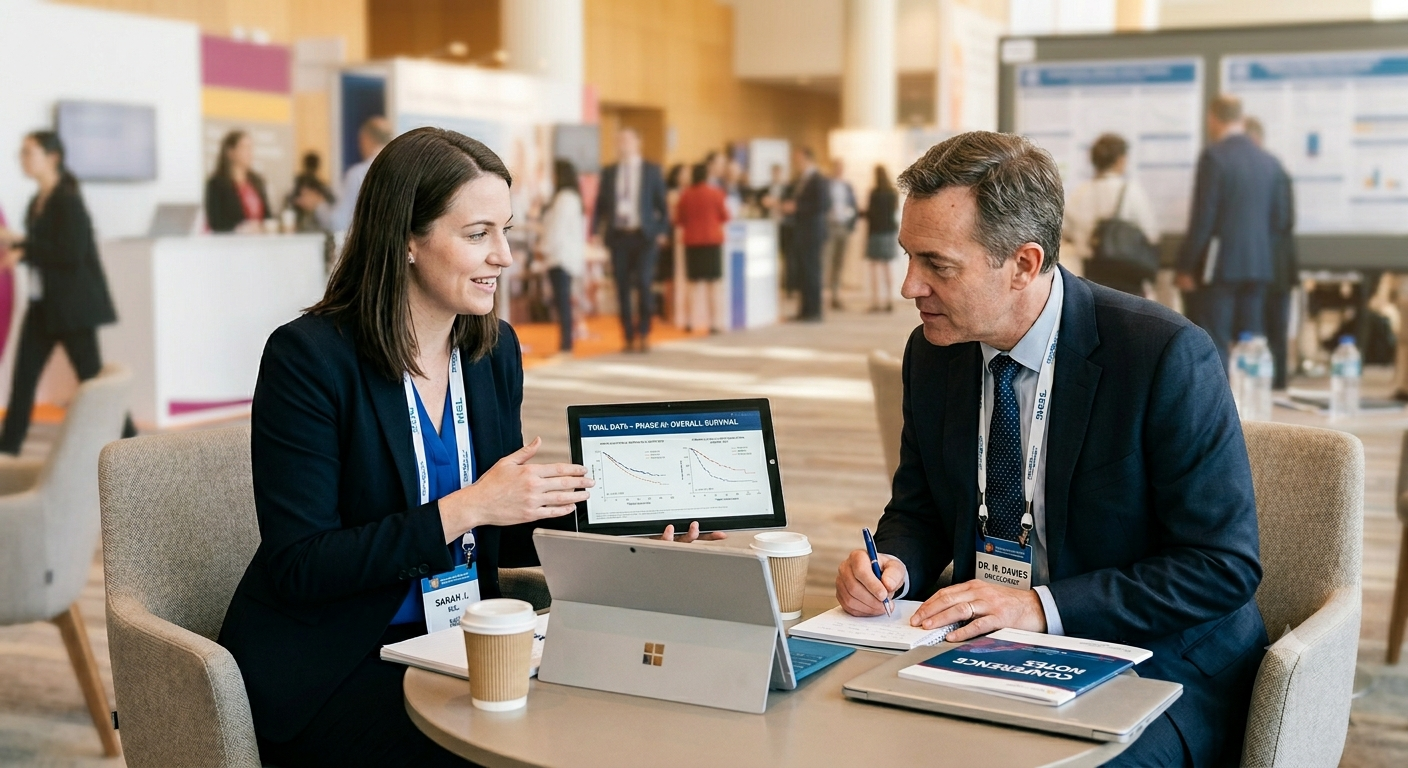
The Art of Scientific Exchange: Navigating Uncertainty in the MSL-Thought Leader Dynamics
No two meetings are ever identical, and an MSL can never truly predict how a conversation will unfold. Navigating this inherent uncertainty requires more than technical fluency; it demands intuition, adaptability, and a commitment to foundational principles that honor the human element of medicine.
Introduction
The role of the Medical Science Liaison (MSL) is often described in terms of technical capabilities: data dissemination, clinical trial support, and scientific expertise. Treating scientific exchange as a “check-the-box”, rigid, algorithmic process misses its core reality. Many MSLs, even the best ones, miss this point entirely and operate under “one way to approach all” principle which is ineffective. Because every interaction involves human beings, diverse clinical environments, and evolving data, the application of scientific exchange is always an art. No two meetings are ever identical, and an MSL can never truly predict how a conversation will unfold. Navigating this inherent uncertainty requires more than technical fluency; it demands intuition, adaptability, and a commitment to foundational principles that honor the human element of medicine.
The Core Principles of Artful Scientific Exchange
1. Create Resonance
Many MSLs, even those at the Principal/Executive levels struggle with creating resonance with their thought leaders. They make it about them and not their thought leader. The most brilliant clinical data means nothing if it falls on deaf ears. The first principle of artful exchange is the ability to read the situation, read the room, and keep an open mind. It is more about understanding and not necessarily about being understood. It is not about what you know but about how you engage around the knowledge that you have.
An MSL must be highly attuned to emotional and situational cues. Is the physician rushed because of a chaotic clinic day? Are they skeptical because of a past experience? Entering an interaction with a rigid script invites failure. In fact, I have never seen this succeed. MSLs who are of expressive social style must be able to step back and listen when engaging an expressive thought leader. Even if analytical in social style, MSLs must be able to become expressive if the thought leader they are engaging is analytical. Without this dance of social styles, scientific exchange becomes nearly impossible. An MSL must practice cognitive flexibility—tuning their frequency to match the thought leader's current state, allowing the conversation to flow naturally rather than forcing a premeditated agenda.
Perhaps the only way to achieve resonance is to have a calm and spacious mind. With attention being diverted to so many things in MSL professionals, I tried to develop some pragmatic tools for my MSLs to implement in the field. I encouraged them to try their best and arrive at the appointment early in order to have 10-15 minutes of quiet time. This space allowed their thoughts to settle and to locate themselves in their bodies (not in their heads). Many have reported back that just this simple technique has completely transformed their ability to engage with their physicians as well as improved their quality of interactions and relationships overall.
2. Create Value (It’s About Them, Not You)
It was a few years into being an MSL and I was in the field visiting my thought leaders at UC Davis. While drinking coffee and preparing for a meeting, a simple mantra began to unfold: “It’s all about the thought leaders.” Yes, this means: it’s not about me, about my home strategy team, or about my manager, or the insights the company wants me to get. It truly is all about the patient-facing physicians. I began to trust this felt sense and by itself, this mental posture catapulted me into new depths of peer-to-peer relationships with my thought leaders.
An artful MSL understands that they are not the main character of the interaction. Ultimately, scientific exchange is entirely about the thought leader and their patients, not about the MSL or their corporate milestones.
True value is created when an MSL uncovers what the physician genuinely needs. Whether it is uncovering a niche piece of data, connecting them with a research peer, or simply providing a sounding board for a complex case, the focus must remain external. If the physician walks away from the interaction feeling that their clinical practice has been enriched, value has been achieved.
This point should encourage you also to strive for the depth and breadth of knowledge. A thought leader will find you valuable if you serve as a renewable resource of information to them, both for the field in general, your company’s assets, but also that of the competitors. Many MSLs miss this point and become one-sided in the nature of their interactions. Thought leaders may perceive this as “having private ends to serve” or even as being dishonest.
3. Engage Through Multi-Directional Listening
Engagement is not a presentation; it is a dynamic, interactive, two-way street. Artful engagement requires listening deeply, probing skillfully for insights, and fostering a mutual understanding from MSL-to-physician and physician-to-MSL. I firmly also believe that it is rooted in resonance and compassion though at first look this may seem intangible.
The biggest insight trap begins with “self-centered” thinking “I have to get these insights at this meeting.” This leads to poor engagement that looks like an interrogation - asking a checklist of questions to harvest data points. There is no warmth in this type of interaction and even after one time of doing this, many MSLs are not invited back. On top of their stressful days, physicians rarely want to be interrogated and I believe specifically because it is emotionally and energetically draining.
True engagement uses active listening and strategic, open-ended probing. It creates a safe intellectual space where the physician feels comfortable sharing their real-world hurdles, doubts, and triumphs. The goal is a synthesis of minds where both parties leave wiser than they arrived. In an ideal scenario, your thought leader should be engaged to let you know their honest opinion and not just “what everyone else thinks”. While it may seem that the honest insights are a reflection of the depth of relationships, actually they are more of a reflection of how you treat the space around you as an MSL or how safe you make others around you feel through your presence.
4. Build a True Relationship, Not a Transaction
We live in a very transactional world. If I do this, then I expect that. True deep relationships are never transactional in nature. The point of scientific exchange is never a short-sighted, transactional win. It is not about “I will get the insight I want today so I can check a box.” Because MSLs deal directly with patient-facing physicians, the stakes are too high for small-minded metrics. The relationship must be built on long-term trust and scientific integrity. When an MSL prioritizes the relationship over the immediate transaction, they become a trusted partner. This long-term alliance is what ultimately bridges the gap between bench science and bedside care.
5. Maintain Radical Respect
Perhaps the most grounding principle of the profession is a healthy dose of humility. In fact, I am willing to step forward and say “there is no such thing as too much humility.” MSLs must be fiercely respectful of a physician's time. They are saving lives in the clinic; the MSL is not.
Acknowledge that every minute a thought leader spends with an MSL is a minute taken away from patient care, research, or much-needed rest. Respecting their time means being hyper-prepared, concise, and radically honest. It means knowing when to wrap up a meeting early if the clinic is in chaos, and never wasting their intellectual bandwidth on superficial updates. Deeply, it means compassion, understanding, and resonance - being in tune with reality as it is rather than the way you, an MSL, wants it to be.
Conclusion
Science is dictated by logic, data, and protocols, but scientific exchange is dictated by human connection. Because humans are inherently unpredictable, the role of the MSL will always belong to the realm of art. By mastering the delicate balance of creating resonance, delivering selfless value, engaging deeply, building long-term relationships, and maintaining radical respect, an MSL transforms a standard corporate function into a vital, life-enriching collaboration.
Posted on June 8th, 2026
by Mirza Peljto, PhD