
SIX EFFORTLESS MSL COMPETENCIES
Here, we continue building on the four core Medical Science Liaison (MSL) Competencies by adding six effortless MSL competencies as a complement. The reason they are called effortless is because they are to be mastered to an effortless level by MSLs.
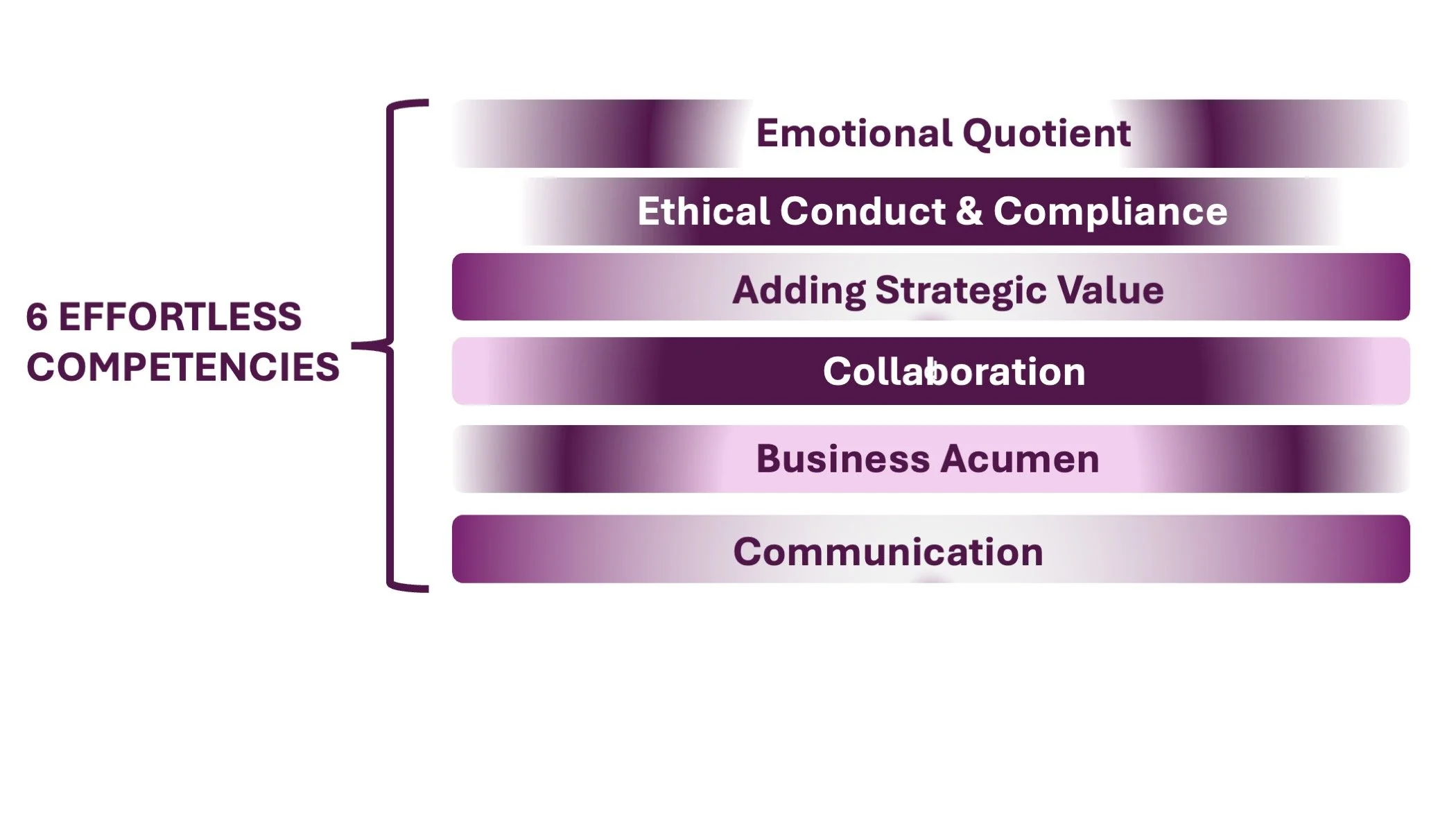
Six effortless MSL competencies are: emotional quotient (emotional intelligence), ethical conduct and compliance, adding strategic value, collaboration, business acumen, and communication.
I. Emotional Quotient
Although research consistently demonstrates that emotional quotient (EQ), also known as emotional intelligence, is highly malleable and can be developed over time, many professionals still subscribe to the belief that “you either have it or you don’t.” Daniel Goleman organized emotional intelligence into four core domains, two personal competencies and two social competencies. The personal competencies are self-awareness and self-management, while the social competencies are social awareness and relationship management (Goleman, 1998).
Self-Awareness
MSLs with a high degree of self-awareness are adaptable and capable of navigating a wide variety of situations with authenticity and professionalism. They are attuned to their emotions, strengths, weaknesses, values, and motivations, while also recognizing how these characteristics influence others. Self-aware MSLs understand the importance of “reading the room” and adjusting their approach to fit the audience and circumstance.
They are comfortable acknowledging the limits of their knowledge and are more likely to say, “I don’t know, but I will find out,” rather than speculate or provide incomplete information. They possess confidence without arrogance and are genuinely comfortable in their own skin. They are mindful of their body language, tone, and communication style and can adapt these elements to effectively respond to the needs of the moment.
Self-Management
MSLs with strong self-management demonstrate emotional control, resilience, and professionalism, particularly during challenging situations. They are able to manage impulses, avoid reactive responses, and maintain composure under pressure. These individuals project confidence and executive presence while remaining approachable and collaborative.
Whether interacting with difficult stakeholders, navigating organizational change, or facing unexpected adversity, they remain focused on solutions rather than problems. They adapt to change with agility while pursuing their goals with persistence, discipline, and sustained energy.
Developing self-awareness and self-management is ultimately the responsibility of the individual. Seeking honest feedback from trusted colleagues, mentors, friends, and family members can provide valuable insights. Practices such as reflection, mindfulness, meditation, and intentional pauses throughout the day can help enhance both self-awareness and emotional regulation.
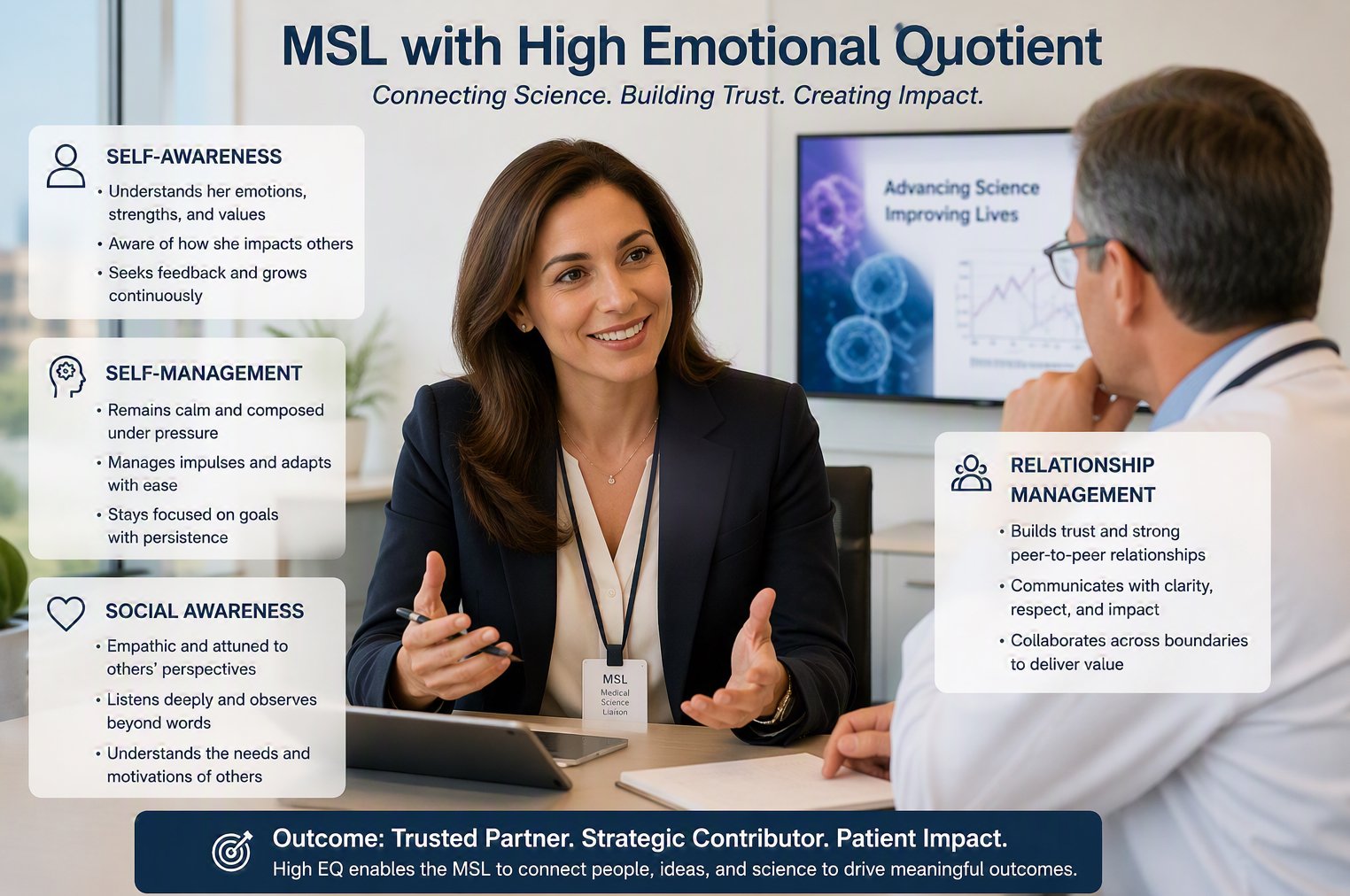
MSLs with a high degree of EQ have strong self-awareness, self-management, social awareness, and relationship management attributes.
Social Awareness
Social awareness and relationship management often take longer to develop and require a greater degree of emotional maturity. For MSLs, social awareness involves understanding the emotional makeup, perspectives, motivations, and needs of others. It requires active listening, empathy, and the ability to genuinely connect with a diverse range of individuals.
Highly effective MSLs can recognize subtle verbal and nonverbal cues and adjust their communication style accordingly. They are able to create trust and rapport because stakeholders feel understood, respected, and valued.
Relationship Management
Without the ability to build and manage relationships effectively while consistently delivering value to internal and external stakeholders, an MSL will struggle to reach their full potential. Relationship management is arguably one of the most important—and challenging—competencies in the role.
I believe every MSL benefits from having a strong field mentor, ideally a Principal or Executive MSL who has mastered the art of relationship management. Such mentors can coach less experienced MSLs through complex stakeholder dynamics and help them develop stronger engagement strategies.
Relationship management is both a science and an art. It is developed through years of experience, continuous refinement, and meaningful interactions in the field. It requires ongoing introspection and reflection about why certain relationships thrive while others stagnate. It also demands attention to nuance, recognizing that approaches that resonate with one thought leader may be ineffective with another. Successful MSLs tailor their engagement strategies while remaining authentic and value-driven.
Manager’s Corner
EQ can often be assessed during the interview process through thoughtful behavioral questions and careful observation of a candidate’s communication style, self-awareness, and responses to challenging scenarios. While isolated observations should never be overinterpreted, details such as professionalism, preparation, receptiveness to feedback, and interpersonal presence can provide insight into a candidate’s level of emotional intelligence.
Managers can play a critical role in developing EQ among individual contributors, particularly when trust-based relationships have been established. Frequent coaching, timely feedback, and individualized development plans can significantly accelerate growth in this area.
Team meetings and field interactions provide excellent opportunities to discuss emotional intelligence, share examples of high-EQ behaviors, and reinforce best practices through stories and real-world experiences. Understanding the unique strengths and developmental opportunities of team members also creates valuable peer-coaching opportunities. For example, an individual with exceptional self-awareness may serve as a mentor to a colleague looking to strengthen that competency.
Ultimately, however, these developmental practices are only effective within a culture built on trust, psychological safety, empowerment, and a genuine commitment to continuous improvement.
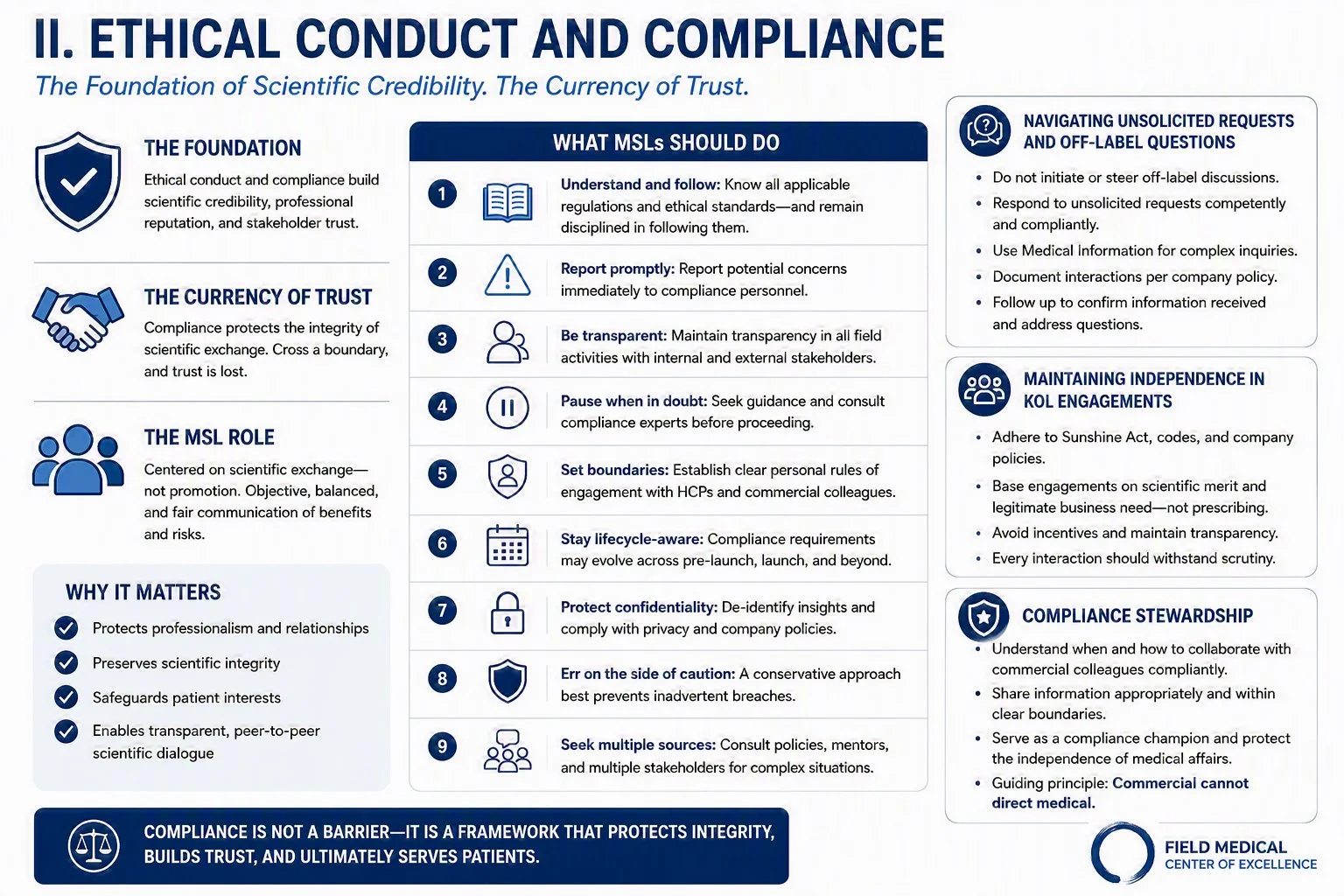
The frameworks for ethical conduct and compliance stewardship.
II. ETHICAL CONDUCT AND COMPLIANCE
Ethical conduct and compliance are among the most fundamental competencies of an effective Medical Science Liaison (MSL). They are not simply requirements of the role; they are the foundation upon which scientific credibility, professional reputation, and stakeholder trust are built. Ethical misconduct or non-compliant behavior can have significant consequences for both the individual and the organization.
Compliance is about far more than “following the rules.” It is the framework that protects the integrity of scientific exchange. The moment a healthcare professional perceives that an MSL has crossed an ethical or compliance boundary, trust can be irreparably damaged. Ethical conduct and compliant engagement are the currency of trust in the field. An MSL’s value is rooted in scientific credibility, and any behavior that places that credibility—or the reputation of a thought leader—at risk is rarely worth the potential gain.
Most organizations provide compliance training for medical affairs professionals. Some maintain dedicated field medical compliance teams, while others rely on detailed codes of conduct and compliance manuals to guide field interactions. Although these resources are invaluable, many situations encountered by MSLs are nuanced, requiring consultation, mentorship, and collaboration with compliance experts. The challenge is often amplified when working alongside commercial colleagues in the field.
So, what should MSLs do?
1. Develop a deep understanding of all applicable compliance regulations and ethical standards within your country, therapeutic area, and organization—and remain disciplined in following them.
2. Report potential compliance concerns immediately. If you observe non-compliant behavior or find yourself involved in a situation that may present a compliance risk, engage the appropriate compliance personnel without delay.
3. Maintain transparency in all field activities with both internal and external stakeholders.
4. When in doubt, pause. Seek guidance, gather additional information, and consult compliance experts before proceeding. If your organization has dedicated field medical compliance personnel, ask for specific recommendations on how to navigate the situation.
5. Establish clear personal boundaries and rules of engagement. This includes situations involving meals, field visits, and interactions with commercial colleagues.
6. Recognize that compliance considerations may evolve throughout the product lifecycle, particularly during pre-launch and launch periods.
7. Ensure all stakeholder insights are appropriately de-identified and compliant with company policies and privacy regulations.
8. Err on the side of caution. A conservative approach is often the best safeguard against inadvertent compliance breaches.
9. Leverage multiple sources of guidance. Consult company policies, seek mentorship from experienced compliance-minded professionals, and gather perspectives from multiple stakeholders when navigating complex situations.
At its core, the MSL role is centered on scientific exchange rather than commercial promotion. This distinction represents one of the most important compliance boundaries in medical affairs. Scientific information must be presented objectively, including efficacy data, safety findings, limitations, adverse events, and areas of uncertainty. Benefits and risks should always be discussed in a fair and balanced manner.
Perhaps most importantly, MSLs should not view compliance as an obstacle to effective field engagement. Rather, compliance is a framework that protects professionalism, strengthens relationships, preserves scientific integrity, and ultimately serves patients. In many ways, compliance enables the transparent, peer-to-peer scientific conversations that distinguish the medical function from commercial organizations.
Navigating Unsolicited Requests and Off-Label Questions
MSLs should never proactively initiate or steer discussions toward off-label topics. At the same time, they are expected to competently address unsolicited requests from healthcare professionals regarding off-label data. Successfully navigating these conversations requires both scientific expertise and strong situational awareness. MSLs must balance their role as scientific resources with the compliance boundaries that ensure interactions are never perceived as promotional.
Many organizations have Medical Information departments that support the management of complex off-label inquiries, particularly when additional literature, analyses, or data are required. MSLs should be familiar with their organization's policies, documentation requirements, and escalation pathways for handling such requests.
When responding to an unsolicited off-label question, best practice includes documenting the interaction in accordance with company policies and ensuring that any response provided is accurate, balanced, and supported by available evidence. Follow-up may also be appropriate to confirm that the healthcare professional received the requested information and to address any questions regarding the response.
Maintaining Independence in KOL Engagements
Developing strong peer-to-peer relationships with Key Opinion Leaders (KOLs) requires a high level of ethical vigilance. This includes understanding and adhering to the U.S. Sunshine Act (and global equivalents), industry codes of conduct, and company-specific policies governing interactions with healthcare professionals.
MSLs with strong ethical foundations ensure that advisory board invitations, speaker nominations, research collaborations, and similar activities are based solely on scientific merit, expertise, and legitimate business need. These activities should never be influenced by prescribing patterns or used as incentives to influence clinical decision-making. Transparency and honesty remain the guiding principles. Ideally, every interaction, decision, and engagement should be able to withstand scrutiny from regulators, healthcare professionals, internal stakeholders, and the public.
When MSLs operate ethically and compliantly, they not only protect themselves and their organizations but also safeguard the integrity and independence of the healthcare professionals with whom they engage. For this reason, I have always maintained a strong interest in both compliance frameworks and their practical application in day-to-day field activities. During my tenure at one organization, I had the privilege of serving as a Medical Compliance Champion for the field medical team, helping colleagues navigate complex compliance scenarios and reinforce best practices.
Compliance Stewardship
Throughout my experience as both an MSL and an MSL leader, one of the greatest compliance risks has often arisen from well-intentioned pressure exerted by commercial stakeholders. Navigating this interface requires clarity, discipline, and a thorough understanding of applicable compliance requirements.
MSLs must understand when joint interactions with commercial colleagues are appropriate, how information can be shared compliantly, and where boundaries exist. Alignment between medical and commercial teams is essential, but alignment must never come at the expense of the independence of the medical function. MSLs should know how to collaborate effectively with sales and marketing colleagues while avoiding activities that could compromise compliance. This includes understanding appropriate approaches to sharing insights, participating in cross-functional discussions, and engaging with healthcare professionals.
In my experience, commercial colleagues may not always appreciate the complexity and rigor of medical compliance requirements. Consequently, MSLs often serve as internal champions of compliance, helping protect the organization's reputation while preserving the credibility and independence of the medical function. This responsibility can become even more challenging in organizations where medical affairs functions report through commercial leadership structures. In these environments, maintaining scientific independence requires strong communication skills, professional courage, and an unwavering commitment to compliance principles.
If there is one guiding principle that has consistently served medical affairs professionals well, it is this:
Commercial cannot direct medical.
While this principle does not eliminate the need to understand the specific compliance requirements governing field interactions, it serves as an important compass for collaborating with commercial colleagues. Mastering this balance requires ongoing dialogue, relationship-building, and a willingness to educate stakeholders on the rules and standards that govern compliant scientific engagement. Ultimately, compliance stewardship is not just about preventing risk—it is about preserving the integrity, credibility, and independence that make the MSL role uniquely valuable.
III. ADDING STRATEGIC VALUE
Medical Science Liaisons have a unique opportunity to create meaningful value for a diverse group of stakeholders, provided that ethical conduct and compliant behavior remain at the center of all activities.
Broadly speaking, these stakeholders can be divided into internal stakeholders (those within the organization) and external stakeholders (those outside the organization). Depending on the therapeutic area and company structure, internal stakeholders may include representatives from translational medicine, clinical development, medical affairs, commercial, marketing, market access, legal, regulatory affairs, and many others. The most effective MSLs are not passive participants in these relationships. Instead, they leverage their scientific expertise, field insights, and understanding of organizational priorities to deliver value across multiple functions. The extent to which this occurs is often influenced by company culture—whether collaboration is encouraged across departments or whether teams operate in relative isolation.
External stakeholders are often thought of primarily as Key Opinion Leaders (KOLs), but the ecosystem is much broader. It may include healthcare institutions, medical departments, advanced practice providers, nurses, pharmacists, investigators, patient advocacy groups, research networks, and external collaborators from partner organizations. Ultimately, the highest form of value creation occurs when MSL activities benefit both internal and external stakeholders while advancing patient care. This is true strategic value.
MSLs create value in many ways, including identifying actionable medical insights, supporting clinical trial activities, facilitating investigator-sponsored research, fostering scientific collaborations, assisting with evidence-generation efforts, and connecting external scientific needs with internal organizational capabilities. The possibilities are virtually limitless.
MSLs who possess a deep understanding of both the healthcare landscape and their company's strategic priorities are particularly effective in this area. They can identify opportunities, recognize unmet needs, and compliantly align stakeholder interests with organizational objectives. They develop strong cross-functional relationships and maintain awareness of evolving priorities across multiple internal teams. In many respects, these MSLs operate with a "value-first" mindset, seeking opportunities to contribute value in every interaction.
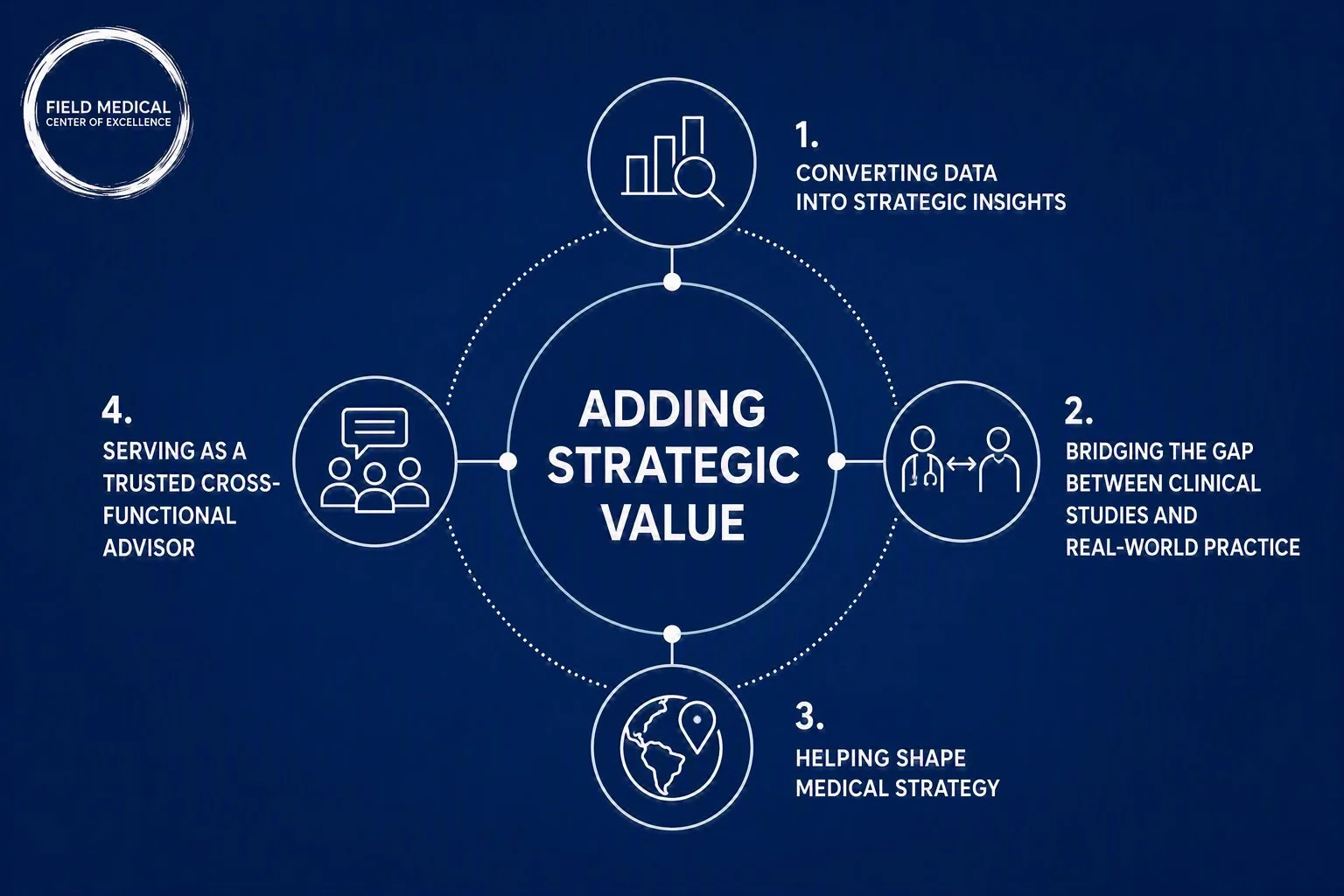
MSLs add strategic value by: 1. converting data into strategic insights; 2. bridging the gap between clinical studies and real-world practice; 3. helping shape medical strategy; 4. serving as a trusted cross-functional advisor.
The most impactful MSLs do not simply communicate company strategy to the field—they help shape company strategy through what they learn from the field.
1. Converting Data into Strategic Insights
An average MSL may submit a field report stating: "Dr. Smith is using Asset X in second-line patients." A strategic MSL goes a step further and answers the question: "So what?"
More importantly, they seek to understand why. Why is the KOL practicing in that manner? What underlying belief, unmet need, clinical experience, or market dynamic is influencing the decision?
The ability to convert observations into strategic insights represents the difference between passive reporting and strategic contribution. Strategic MSLs synthesize information across multiple stakeholder interactions, identify recurring themes, recognize emerging patterns, and connect seemingly unrelated observations. They uncover clinical unmet needs, shifts in treatment paradigms, barriers to access, emerging scientific trends, and potential opportunities for future evidence generation. Rather than merely reporting what a KOL said, they explain why it matters and how it may impact clinical development, medical strategy, evidence-generation plans, or the organization's future pipeline.
2. Bridging the Gap Between Clinical Studies and Real-World Practice
Few roles sit closer to the intersection of clinical development and real-world medicine than the MSL role. MSLs have a front-row seat to how clinical data is interpreted, questioned, and applied by practicing healthcare professionals. One of the greatest sources of value an MSL can provide is identifying gaps between the questions clinical trials answer and the questions clinicians are actually asking. This often becomes evident when MSLs repeatedly hear questions regarding topics such as:
Specific patient subpopulations
Treatment sequencing
Combination therapies
Long-term safety outcomes
Real-world effectiveness
Quality-of-life measures
Practical implementation challenges
By recognizing these patterns, MSLs serve as a critical feedback mechanism for clinical development, medical affairs, and research teams. These insights can inform future studies, support investigator-initiated trials (IITs), and help ensure that future evidence-generation efforts address clinically relevant questions that matter most to healthcare providers and patients.
3. Helping Shape Medical Strategy
Strategically minded MSLs do far more than execute a medical plan developed at corporate headquarters. They contextualize that strategy and adapt it to the realities of their local geography, healthcare systems, and stakeholder networks. This competency is best described as territory entrepreneurship.
Experienced MSLs recognize that regional dynamics can vary significantly. Differences in treatment patterns, patient populations, institutional priorities, referral networks, and healthcare infrastructure often require tailored approaches. The most effective MSLs analyze their territories in much the same way a business owner evaluates their business. They identify opportunities, anticipate challenges, and seek solutions that improve scientific engagement and ultimately enhance patient outcomes. By bringing local perspectives into strategic discussions, they help ensure that organizational initiatives remain aligned with real-world clinical practice.
4. Serving as a Trusted Cross-Functional Advisor
MSLs interact regularly with a wide range of internal stakeholders, including colleagues in medical affairs, clinical development, market access, commercial, marketing, regulatory affairs, and other functions. Each of these groups relies on medical affairs to understand the scientific realities and evolving dynamics within the healthcare landscape.
MSLs who excel in this competency act as trusted cross-functional advisors. Through compliant sharing of objective, de-identified field insights, they help internal teams better understand stakeholder perspectives, emerging trends, scientific challenges, and unmet needs. These insights often challenge assumptions, clarify misconceptions, and ground strategic decision-making in real-world evidence and experience. As a result, organizational messaging, evidence-generation strategies, and medical initiatives become more closely aligned with the realities faced by healthcare providers.
In many ways, MSLs serve as indispensable internal consultants. Their unique vantage point at the interface of science, medicine, and clinical practice allows them to provide insights that few others within the organization can access. When effectively gathered, synthesized, and communicated, these insights help organizations develop stronger medical strategies and execute them in a manner that resonates with the evolving scientific landscape. Ultimately, the MSL who consistently adds strategic value is not measured solely by activity metrics or outputs. Rather, their impact is reflected in how effectively they connect stakeholders, translate insights into action, influence strategy, and contribute to better outcomes for patients.
IV. COLLABORATION
The best MSLs are known and valued by a wide range of internal stakeholders because of the quality of their insights, their level of engagement, and their willingness to collaborate. Collaboration sits at the very heart of the MSL role. Without collaboration with internal stakeholders, the MSL provides limited value to the organization. Likewise, without collaboration with external stakeholders, the MSL provides limited value to healthcare professionals and ultimately to patients.
For an MSL, collaboration can take many forms. It may involve helping facilitate an investigator-initiated trial (IIT), supporting enrollment efforts at a clinical trial site, contributing insights to a medical strategy discussion, or partnering with market access, clinical development, or medical affairs colleagues on important initiatives. Throughout my leadership experience, one of the competencies I consistently prioritized in MSLs was a strong collaborative mindset. This also requires intentionally allocating time and energy to support collaborative requests and viewing partnership as a core responsibility rather than an occasional activity. While collaboration with internal stakeholders is important, the highest level of collaboration—the true "gold standard" of the MSL role—is the ability to facilitate meaningful partnerships between the company and external stakeholders, including KOLs, investigators, institutions, and research networks. MSLs who excel in this area become trusted connectors, creating value for all parties while advancing scientific understanding and ultimately improving patient care.
Many MSLs never reach this level of excellence because it requires a unique combination of knowledge, insight, and relationship-building skills. First, they must have a deep understanding of the priorities, objectives, and strategic goals of their internal stakeholders. Second, they must understand the scientific interests, clinical challenges, and research ambitions of their KOLs and institutions. Third, they must be able to place both perspectives within the broader context of the therapeutic landscape, identifying areas where mutual interests align and meaningful collaborations can emerge. The most exceptional MSLs serve as catalysts for innovation. They recognize opportunities where investigators, institutions, and company teams can work together to address important scientific questions, generate new evidence, or advance patient care. By bridging these worlds, they move beyond being scientific communicators and become strategic enablers of progress.
At the highest level, these "unicorn" MSLs are often deeply integrated into the scientific ecosystem. They may contribute to publications, support evidence-generation initiatives, participate in thought leadership activities, and help advance scientific discourse—always within the boundaries of compliance and organizational policy. Their value lies not merely in what they know, but in their ability to bring people, ideas, and opportunities together in ways that benefit all stakeholders. Ultimately, collaboration is more than a competency; it is a multiplier of impact. The MSLs who master collaboration consistently amplify the value they provide to their organizations, their KOLs, and the patients they ultimately serve.
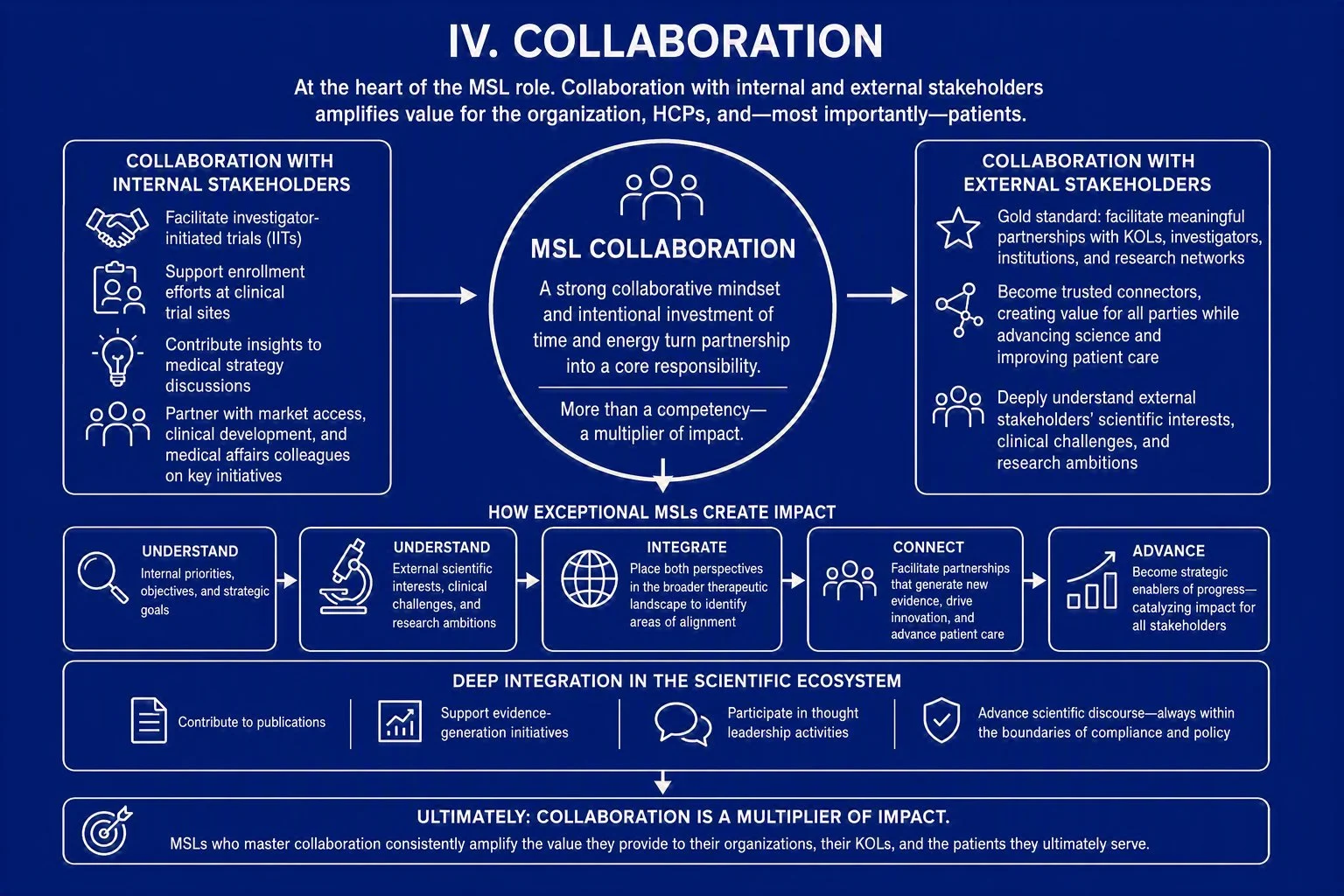
Through strong collaboration MSLs can make great impact.
V. BUSINESS ACUMEN
Business acumen is one of the most misunderstood competencies in the MSL profession. Contrary to common misconceptions, business acumen is not about selling products or influencing prescribing behavior—such activities would be neither appropriate nor compliant for an MSL. Rather, business acumen is about relevance: understanding the broader healthcare ecosystem and ensuring that scientific exchange translates into meaningful outcomes for patients, healthcare providers, and organizations. An MSL with strong business acumen understands how healthcare systems, clinical pathways, payer considerations, institutional priorities, and company objectives intersect. More importantly, they use this knowledge to make scientific interactions more impactful and actionable.
We can define business acumen as the ability to contextualize scientific exchange within the broader healthcare ecosystem and the company lifecycle, enabling the MSL to prioritize high-impact interactions, generate actionable insights, and navigate systemic barriers so that clinical data ultimately translates into improved patient access and outcomes.
From my experience as an MSL manager, individuals with strong business acumen recognize a fundamental truth: even the most compelling science has limited value if it cannot be translated into clinical practice. Scientific excellence alone is not enough. MSLs must understand the factors that influence how, when, and whether patients ultimately receive access to innovative therapies.
This competency can be viewed through four key pillars.
1. Navigating Healthcare Ecosystems
MSLs operate within increasingly complex healthcare environments. While scientific expertise is essential, it must be accompanied by an understanding of the practical realities faced by healthcare providers and institutions.
High-performing MSLs are able to engage healthcare professionals in discussions that extend beyond clinical data and encompass topics such as:

Business acumen is one of the most misunderstood competencies in the medical affairs profession.
Healthcare system dynamics
Reimbursement and payer considerations
Treatment access challenges
Institutional protocols
Administrative and logistical barriers
Health economic considerations
By understanding these factors, MSLs gain valuable insights into the real-world challenges that may prevent patients from benefiting from scientific advances. This allows them to bring meaningful perspectives back to internal stakeholders and contribute to solutions that improve patient care.
2. Resource Optimization and Strategic Territory Planning
One of the most valuable resources available to an MSL is time. Business acumen requires the ability to strategically allocate that time toward activities that create the greatest value. Effective MSLs prioritize engagements that align with both local and global medical objectives. They understand which stakeholders, institutions, studies, and initiatives are likely to generate the greatest scientific and strategic impact.
This involves:
Prioritizing high-value scientific interactions
Developing territory-specific engagement plans
Balancing reactive and proactive activities
Aligning field efforts with broader medical strategy
Investing time where it can have the greatest influence on patient outcomes
Rather than simply maximizing activity volume, strategically minded MSLs focus on maximizing impact.
3. Understanding the Asset Lifecycle and Pipeline Context
Business acumen also requires a deep understanding of where an asset sits within its development and commercialization journey. The role of an MSL supporting an early-stage pipeline asset differs significantly from that of an MSL supporting a recently launched product or a mature, established therapy. The scientific questions, stakeholder needs, evidence-generation priorities, and compliance considerations may all vary depending on the stage of the asset lifecycle. High-performing MSLs understand these distinctions and tailor their activities accordingly. They recognize how scientific exchange can support organizational objectives while remaining firmly grounded in compliance and scientific integrity.
They are able to anticipate questions such as:
What evidence gaps exist at this stage?
What insights are most valuable to internal stakeholders?
What scientific questions are emerging in the field?
How should engagement strategies evolve as the asset matures?
This contextual understanding enables MSLs to be more effective partners to both internal teams and external stakeholders.
4. Cross-Functional Strategic Alignment (Within Compliance Boundaries)
MSLs do not operate in isolation. They work alongside colleagues from medical affairs, clinical development, market access, commercial, regulatory affairs, and other functions that collectively support a product's success. Business acumen requires MSLs to understand the priorities and challenges faced by these stakeholders while maintaining the independence and compliance standards of the medical function.
This includes understanding:
Brand and product strategies
Market access challenges
Clinical trial recruitment priorities
Evidence-generation objectives
Healthcare system barriers
Competitive and therapeutic landscape dynamics
Armed with this context, MSLs can gather highly relevant, compliant field insights that help internal teams make better-informed decisions. In many cases, these insights enable organizations to identify emerging opportunities, address misconceptions, overcome barriers to adoption, and refine medical strategies based on real-world stakeholder perspectives. Importantly, the goal is not to advance commercial objectives, but rather to ensure that scientific understanding of the market is accurate, actionable, and grounded in reality.
Business acumen elevates an MSL from a scientific communicator to a strategic field-based medical leader. It enables the MSL to understand not only the science, but also the systems, stakeholders, and practical realities that determine whether scientific advances ultimately reach patients. The most effective MSLs recognize that great science and business understanding are not competing priorities—they are complementary capabilities. Scientific expertise provides credibility, while business acumen provides context. Together, they enable MSLs to generate meaningful insights, influence strategy, and help ensure that innovative therapies translate into tangible benefits for the patients who need them most.
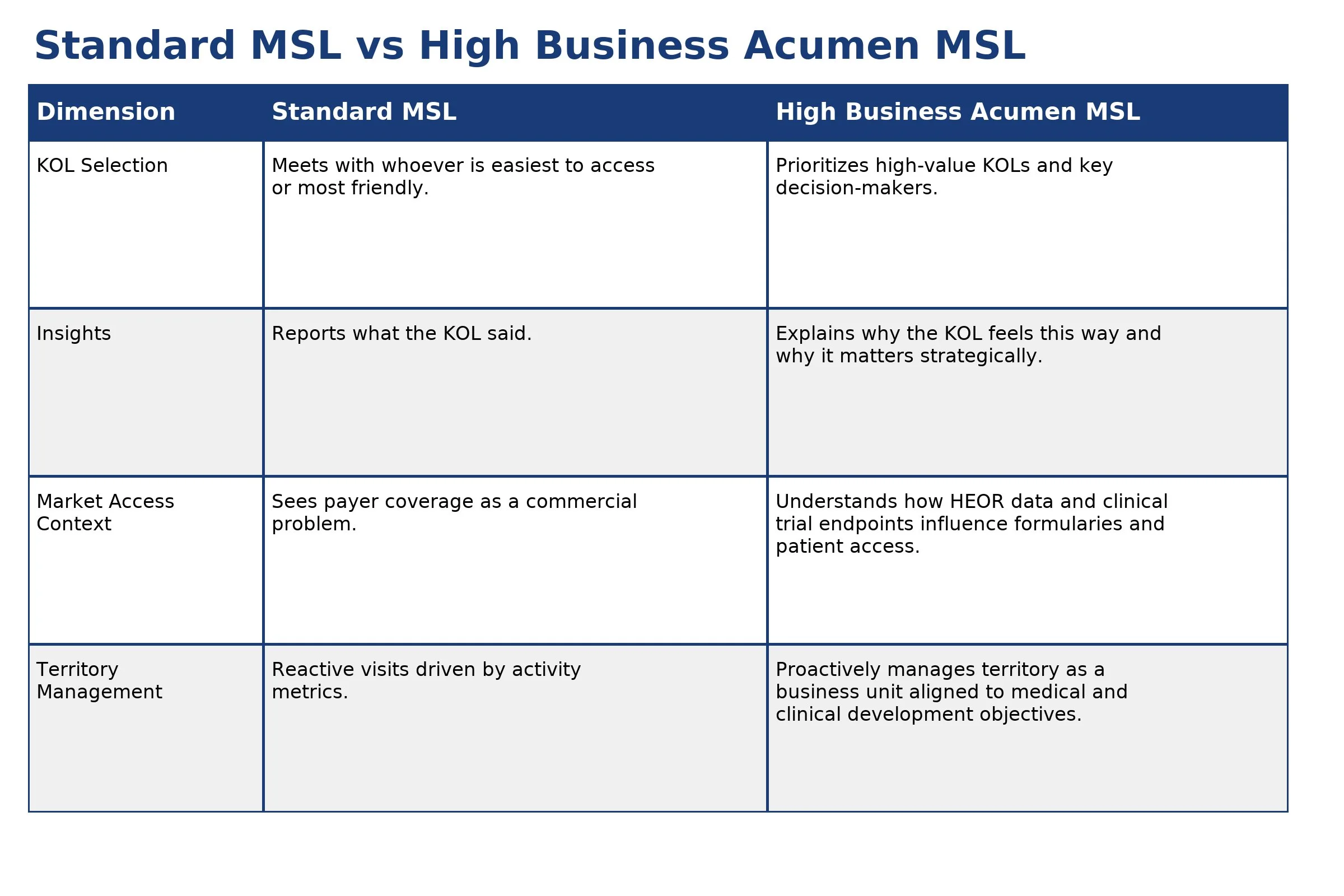
MSL Business Acumen Comparison
VI. COMMUNICATION
If insights are the currency of the MSL role, then communication is the exchange rate that determines their value. Even the most meaningful insight loses impact if it is communicated poorly, while a well-communicated insight can shape strategy, strengthen relationships, and drive action across the organization.
Throughout my career, I have had the privilege of leading high-performing MSL teams. Yet communication remains one of the most difficult competencies to master. It is challenging not only for MSLs but for leaders as well. In fact, in nearly every organization I have been part of, communication has often been cited as an area requiring improvement. Effective communication is rarely perfected—it is a discipline that demands continuous refinement. For MSLs, great communication transcends the medium. Whether the interaction occurs face-to-face, virtually, by telephone, or through email, the underlying principles remain the same.
1. Conciseness
We live in a world where everyone is competing for attention. People are bombarded with emails, meetings, messages, and competing priorities. In such an environment, concise communication becomes a differentiator. The most effective MSLs communicate with clarity and brevity. They understand that being concise does not mean oversimplifying; it means delivering the essential message without unnecessary complexity. Stakeholders should immediately understand the purpose of the communication, the key takeaway, and any required action. Conciseness becomes part of an MSL's professional brand. In a landscape often characterized by excessive verbosity, concise communicators stand out.
2. Accuracy and Precision
MSLs are trusted scientific professionals, and trust is built on accuracy. Every communication should be factual, transparent, balanced, and scientifically sound. At the same time, communication must also be precise. A stakeholder reading an email or listening to a presentation should not be left wondering what was meant or what action is required. Precision minimizes ambiguity and prevents misunderstanding.
I often share advice that was given to me by one of my graduate school advisors:
"Your writing should read like a Hemingway novel."
Simple. Concise. Clear. Nothing important omitted. Nothing unnecessary included. The same principle applies to field insights, medical communications, and scientific discussions. The goal is not to impress stakeholders with complexity; the goal is to communicate effectively. Communication is often viewed as the ability to speak well. In reality, exceptional communication begins with listening. MSLs are not only providers of scientific information; they are also recipients of valuable information from healthcare professionals, investigators, and internal stakeholders. The ability to listen deeply and synthesize information is therefore one of the most important communication skills an MSL can develop.
Great listeners pay attention not only to words but also to subtle cues, including:
Changes in tone
Pauses and hesitation
Body language
Facial expressions
Emphasis and inflection
What is not being said
These observations often provide context that is just as important as the spoken message. The most effective MSLs are fully present during conversations. They maintain eye contact, actively engage, and focus entirely on understanding the stakeholder's perspective. Their attention is directed toward the individual in front of them rather than toward their notebook.
After the interaction, they are able to accurately reconstruct and synthesize the conversation into actionable insights. Why is this important? Human attention is finite. When we are actively taking detailed notes, a portion of our attention is diverted away from the conversation itself. While we may believe we are multitasking, cognitive science suggests that what we are actually doing is rapidly switching attention between tasks, often reducing performance in both. For this reason, many highly experienced MSLs adopt a minimalist note-taking approach during meetings. Rather than attempting to document every detail in real time, they may jot down only a few keywords or prompts that help trigger recall after the discussion is complete. This allows them to remain fully engaged in the human interaction while still capturing key information afterward. The goal is not the elimination of note-taking but rather the optimization of presence, connection, and active listening.
Manager's Corner
Communication is one of the most important competencies managers are responsible for developing within their teams. Managers influence communication through team meetings, one-on-one coaching, field rides, and most importantly, by modeling effective communication themselves. Like any competency, communication improves through deliberate practice, observation, and feedback. Unfortunately, many managers struggle with communication themselves and may not actively invest in improving their own skills. This creates an opportunity for senior leaders to model effective communication and coach managers in turn. Organizations that invest in strong communication frameworks often benefit from improved productivity, stronger alignment, and more effective execution of strategy.
One area where I frequently coach early-career MSLs involves note-taking during KOL interactions. Newer MSLs often feel compelled to document everything for fear of missing valuable insights. In doing so, however, they may miss the nuances of the conversation itself—the body language, emphasis, tone, and interpersonal connection that give context to the discussion. I often encourage MSLs to keep a notebook available as a sign of respect and preparedness, but to limit in-meeting notes to a few key words or phrases whenever possible. This approach allows them to remain engaged while preserving enough cues to accurately document the discussion afterward. As MSLs gain experience, deepen their therapeutic expertise, and build stronger relationships with KOLs, many become remarkably skilled at retaining and synthesizing information in real time. Following a meeting, they can often reconstruct the key points, identify emerging themes, and convert observations into actionable insights with impressive accuracy.
References:
Goleman, D. (1998). Working with Emotional Intelligence. New York, NY: Bantam Books.
Note on use of AI:
Six effortless MSL competencies were creatively developed based on professional experience and the ideas originated herein are original to the best of our knowledge. All ideas were developed by Mirza Peljto, PhD and the Field Medical Center of Excellence. Once the ideas were developed, initial text was produced by Dr. Mirza Peljto. Further reiterative method was used in collaboration with AI platform, Gemini by Google to expand on the ideas (2026, July 21 version) [Large language model]. https://gemini.google.com/.
Once the fascicle was fully written, the final version was proofread by Microsoft Copilot (GPT-5-based large language model) [Large language model]. https://copilot.microsoft.com Microsoft (2026) with any subsequent minor editorial changes. Microsoft Copilot was used to assist with editorial review, grammar correction, and stylistic refinement. All conceptual content, framework development, and scientific interpretations originated from the author and were independently reviewed prior to publication.